Wheat Yields per Hectare with Drip Tape: A Comprehensive Guide to Enhancing Crop Production
Introduction to the Importance of Strip Tape Drip in Wheat Cultivation
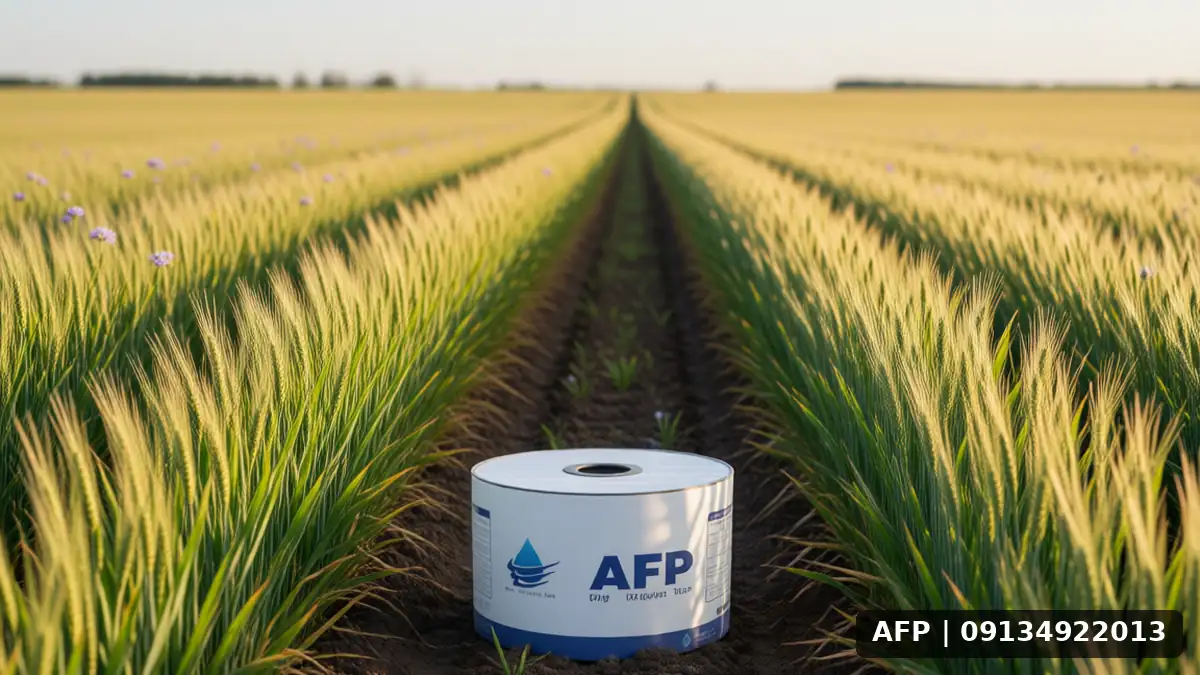
Wheat, as one of the most important cereal grains, has always been a subject of discussion among farmers and irrigation specialists. While conventional surface irrigation methods require high water consumption, pressurized irrigation systems, and specifically Strip Tape Drip (Strip Tape Drip) offer a modern and economical solution. Due to its specific structure, which places the water tube adjacent to seed rows, Strip Tape Drip ensures that water and fertilizer reach the wheat root cone directly. This process not only reduces plant water stress but also prevents nutrient leaching and more aggressive weed growth. If your goal is to increase onion seed quantity per hectare or in other crops, a proper understanding of the principles of drip and strip irrigation is key to your success. Below, we examine in detail the factors affecting wheat performance with this system.
Principles of Strip Tape Drip Operation and Its Impact on Wheat Performance
Examination of Wheat Plant Root System
The wheat root system is fibrous, with the most active roots located at shallow depths (approximately 30 to 50 cm). Strip Tape Drip is designed to moisten soil precisely within these active root zones. Unlike subsurface drippers, Strip Tape Drip has direct contact with the soil, which increases water infiltration rate. This feature is critical for wheat, as the plant requires continuous and uniform moisture during the tillering and grain filling stages. Studies indicate that precise control of soil salinity at the root surface can prevent significant yield reduction. To better understand water resource management, read Key Considerations When Using Strip Tape Drip Pipes for Irrigation It is recommended.
Comparison of Tape Irrigation Line with Drip Emitter
Although drip emitters are more popular, the tape line has the advantage of uniform moisture distribution along the row. In drip systems, moisture levels may be lower between two emitters, whereas the tape line creates a uniform wet strip. This is ideal for row crops such as wheat that require full coverage along the seed line. Additionally, tape lines have lower maintenance costs compared to suspended drip emitters, as clogging of the small holes is observed less frequently. However, selecting the appropriate distance of the tape line from the seed line (typically 10 to 15 centimeters) is very critical. For other crops such as barley, which shares many similarities with wheat, examination Rainfed barley harvesting in dry regions can provide a comparative perspective on the drought tolerance of cereals.
Factors affecting wheat yield with tape irrigation line
Planting spacing and tape line layout
Success in the wheat drip tape system depends directly on planting precision, seed count, and tape placement. If seeds are planted closer to the tape, plants access water and nutrients more quickly. Technical standards indicate that for wheat, the optimal configuration is rows spaced 15 to 20 cm apart, with the tape placed in the center or at a 10 cm distance from the seed lines. These settings must be calibrated according to soil type (sandy or clay). In agricultural soils, planting distances and pipe layout follow similar principles. Sugar beet row spacing per hectare However, the physical logic of water flow remains the same. You must adjust the input water pressure so that the drip tape maintains uniform pressure along the entire row length.
Fertilizer Management with Drip Tape
One of the greatest advantages of drip tape is the capability for Fertigation. By injecting nitrogen and phosphorus fertilizers at the beginning of the season, you can increase absorption efficiency. Wheat is sensitive to nitrogen during its early growth weeks. Using drip tape allows you to prevent the leaching of nitrogen into deeper soil layers where wheat roots are not present. This practice not only reduces fertilizer costs but also prevents nitrate contamination of groundwater. This approach differs from the principles of adjusting melon seed density per hectare regarding root space management, but both share the goal of optimizing seed and root space.
Practical Tips for Wheat Drip Tape System Installation and Maintenance
- Obtaining Clear Filtration: Before connecting the drip tape, always use high-precision sand or disc filters. The presence of suspended particles in water is the primary cause of tape aging and clogging.
- Reducing corrosion and contamination: Because the tape is buried in the soil, it must be completely flushed and dried at the end of the season to prevent the growth of corrosive bacteria.
- Pressure check: The ideal pressure for wheat drip tape is typically between 15 and 20 PSI. Excessive pressure causes water to spray from the pipe, while low pressure leads to uneven flow.
- Planting skills: When using a seed drill, the distance between the tape and the seed must be precisely adjusted to prevent the tape from breaking under planting pressure.
- Staged irrigation: Avoid long, continuous irrigation. Scheduling 2 to 3 applications per week with lower volumes is more efficient due to soil compaction.
When cultivating other edge plants or cover crops, it is essential to have a correct understanding of seed requirements. For instance, knowing the quantity of onion seeds per hectare and how to plant them can be beneficial, as the principles of drip line irrigation are generally applicable to most seed-sown crops. Additionally, if you are using ornamental plants or vegetables for cover, the relevant information about parsley seed quantity per hectare can serve as a secondary reference for adjusting spacing.
Frequently Asked Questions (FAQ)
Is drip line irrigation suitable for wheat in heavy (clayey) soils?
Yes, but with caution. In clayey soils, permeability is lower; therefore, irrigation intervals must be extended and the amount of water per cycle increased to prevent surface soil salinization in the root zone. In these climates, the use of very fine filters is essential.
How can I prevent aging and breaking of the drip line?
To do this, avoid placing large stones on the tubes. When plowing the land, always remove the tape from the soil and ensure it is not run over by machinery. Additionally, using UV-Resistant tapes offers higher quality.
Does wheat drip tape require continuous power?
No, this system is passive and only requires an appropriate pump to create initial pressure. It operates with a small diesel or electric pump. Conversely, smart cloud-controlled systems may require continuous power, but the basic operation of drip tape is mechanical-hydraulic. This feature makes it suitable for growing onions and other water-intensive crops generally ideal.
Conclusion
The use of drip tape for wheat is a smart step toward precise and sustainable agriculture. By delivering water precisely to the plant root zone, this system can increase yields by approximately 10 to 20 percent while reducing water consumption by up to 30 percent. The key to success lies in adhering to technical principles, including planting spacing, filtration accuracy, and optimal irrigation planning. Given the trend of continuous droughts in many regions, transitioning from surface irrigation to drip tape is an economic and ecological necessity. We recommend always consulting specialized resources such as the guide Drip tape Use the correct pipe type based on wall thickness and expected service life. Ultimately, awareness of variable yields for different crops, such as blueberries (frostberries), through studies, frostberry harvest levels in Iraq, can help you implement irrigation-centered algorithms for other crops as well.