Complete Guide to Measuring and Selecting 20cm Drip Tape on 1000m Rolls for Farms
Introduction: The Importance of Precision in Measuring Drip Tape
In modern agriculture, optimizing water usage is a core pillar of farm economic viability and sustainability. One of the most critical tools in this process is the proper use of 20 cm 1000 m Roll Drip Tape . Many farmers face the question of exactly how much drip tape their lands require and how to ensure this equipment delivers optimal performance. Drip tapes are a popular choice for growing vegetables, flowers, and water-sensitive crops due to their low cost, rapid installation, and even water distribution. However, minor differences in measurement or roll length selection can lead to water waste or under-irrigation in certain farm sections. In this article, we will expertly explore measurement methods, calculating the number of rolls needed, and essential installation considerations, ensuring you can confidently implement your farm’s irrigation system.
The Concept of Drip Tape and the Use of the 1000 m Roll
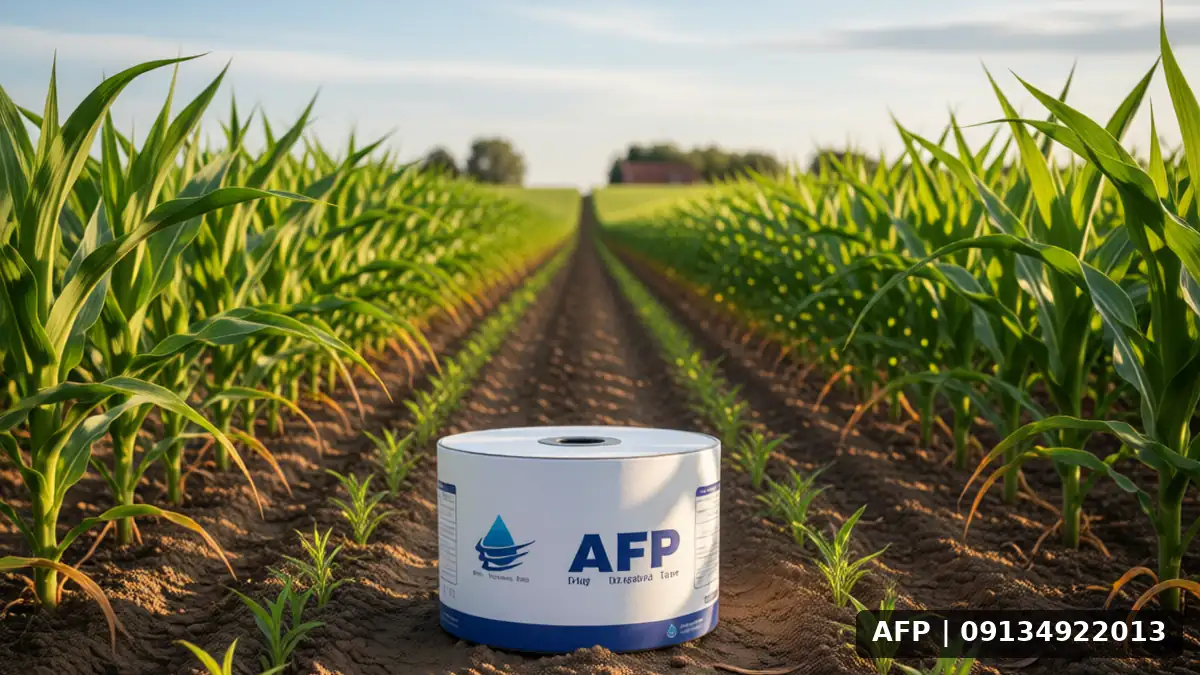
Drip tape is a lightweight plastic tube with small, evenly spaced holes, designed for surface drip irrigation. When referring to 20 cm Drip Tape , we typically do not mean its width or thickness. Instead, it often denotes the spacing between irrigation lines or, in certain Persian-language documents, refers to a specific physical product model. In standard industry practice, “20 cm” generally refers to the tape’s width or a specific model, which should be verified with precision. The 1000 m roll is the most standard length for distribution in medium-to-large farms, as it simplifies transportation and reduces total costs.
To better understand the positioning of drip tapes among other equipment, you can review Types of Irrigation Tapes to select the best option for your field conditions. The correct choice of drip tape type directly affects water distribution quality and plant root establishment.
Technical Features of 20 cm Drip Tape
- Wall Thickness: Typically 80 to 120 microns for seasonal use.
- Emitter Spacing: 20 to 100 cm, depending on the type.
- Flow Rate Test: 2 to 6 liters per hour per nozzle, depending on operating pressure.
- UV Stability: Resistance to sunlight for at least one full growing season.
For farmers looking to compare with fixed systems, a study on Fixed Spray Tape may be useful, as understanding the difference between rotating and fixed systems helps in selecting the correct scenario.
Formulas and precise measurement methods for the farm
The most critical part of this guide is converting farmland dimensions into an exact number of 1,000-meter rolls. Making estimates at this stage can lead to wasted capital. We will cover two primary methods: the method based on furrow width and the method based on area.
Step One: Determine the Wetted Width
Before purchasing, you must understand how many centimeters around the drip tape the water penetrates. This parameter is known as the ‘Wetted Width.’ For standard drip tapes, this distance is typically 30 to 50 centimeters on each side of the tape.
Step Two: Calculate the Total Length of Irrigation Lines
- Measure the field: Accurately measure the field’s length and width using a measuring tape or a GPS device. Assume your field is 100 meters in length and 50 meters in width.
- Determine line spacing: Determine the spacing between two drip tapes based on the wetted width and the plant root spacing. If the wetted width is 40 cm and the plant requires a 40 cm spacing, the line spacing is 40 cm.
- Number of lines: Field width (50 meters) divided by line spacing (0.4 meters) equals 125 irrigation lines.
- Total required tape length: Number of lines (125) multiplied by field length (100 meters) equals 12,500 meters.
- Number of rolls: Total length (12,500 meters) divided by roll length (1,000 meters) equals 12.5 rolls. You must purchase 13 full rolls (or one partial roll, which is not recommended).
For more precise calculations and a better understanding of the parameters affecting consumption, you can refer to Articles on calculating irrigation and seeding rates Refer to the website for general principles of estimating farm requirements.
Additional tips for measuring irregular land parcels
- Sloped land: On steep slopes, water flow is higher at the downhill end. Use larger emitters or parallel drip tapes to prevent over-watering at the lower end.
- Flat land: Distribution is uniform, but ensure that any contaminated layers are removed from the tape to prevent clogging.
Practical tips for installing and maintaining 20 cm drip tape
Buying drip tape is only half the battle; its installation and maintenance determine its useful life.
Connection and Monitoring Strategy
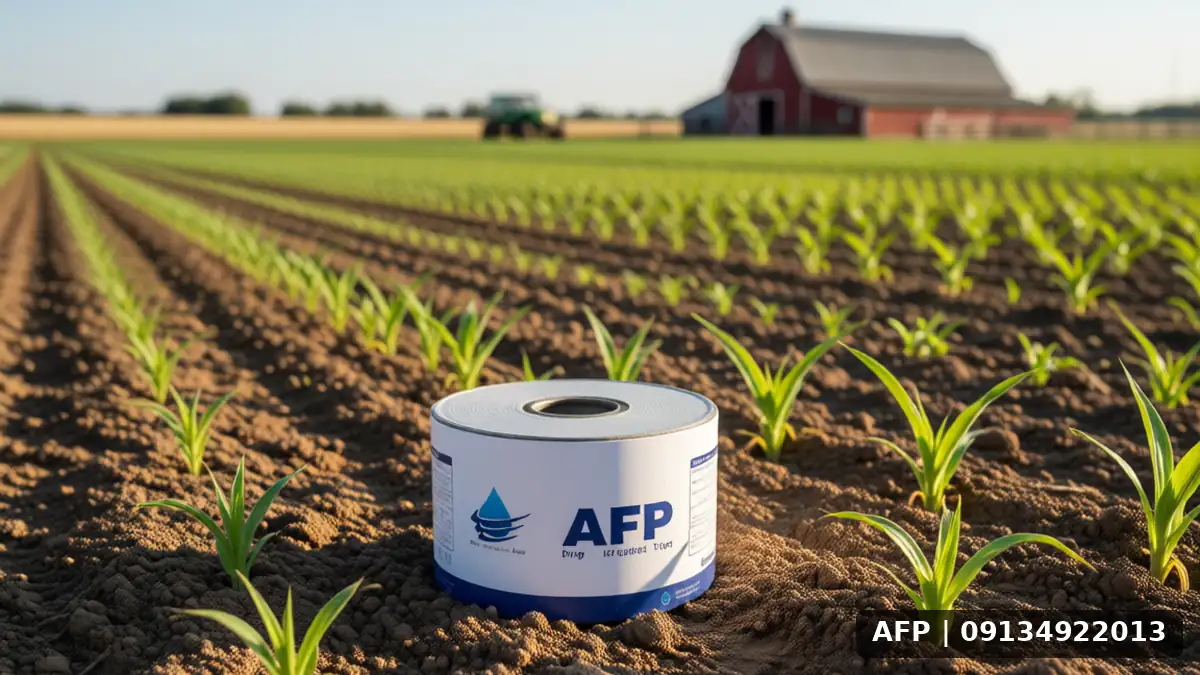
When unrolling a 1000-meter reel, proper connection to the main line is critical. Using suitable fittings reduces leaks and maintains uniform pressure. Always use standard drip tape fittings . Low-cost fittings often lose pressure after one or two weeks.
Preventing Clogging and Scale
- Filtration: The use of a sand or mesh filter with a 100-micron particle size is essential.
- Regular flushing: After each irrigation session, flush water for a few minutes at a high flow rate to prevent sediment from accumulating in the drip line.
- Chemical parameters: Do not combine irrigation with pesticide application using poor-quality water.
If your farm requires precise crop management for seed-based produce, understanding the relationship between the spacing of drip tape lines and seed density is crucial. You can do this by consulting the guide for seed quantity per hectare for cucumbers, and adjusting the drip line spacing accordingly to accommodate plant rooting.
Frequently Asked Questions (FAQ)
Is 20 cm drip tape suitable for all crops?
Drip tape is suitable for most vegetables, greenhouse flowers, and seed-propagated crops. However, for woody trees with very wide spacing, drip tape is generally not the primary choice, and in-ground drip systems with adjustable emitters or flexible tapes with greater thickness are recommended. Nevertheless, if your tree spacing is close to 40 to 50 cm, using flexible rotary drip tape is also logical.
Why must I definitely choose the 1000 m roll?
The 1000 m roll is the industrial standard. Those who buy shorter rolls (such as 500 m) increase the cost of connections and create more weak points in the system. There is also no longer roll that would make transportation difficult. Therefore, 1000 m is the optimal balance between cost and performance.
What is the difference between perforated drip tape and regular drip tape?
Perforated drip tape has holes through which water exits the tape via pressurization and is usually designed for muddier field conditions. Regular drip tape has inline emitters that better maintain flow stability under variable pressures. For more information, you can read the article Drip irrigation with perforated tape study this.
Can I reconfigure the drip tape in subsequent years?
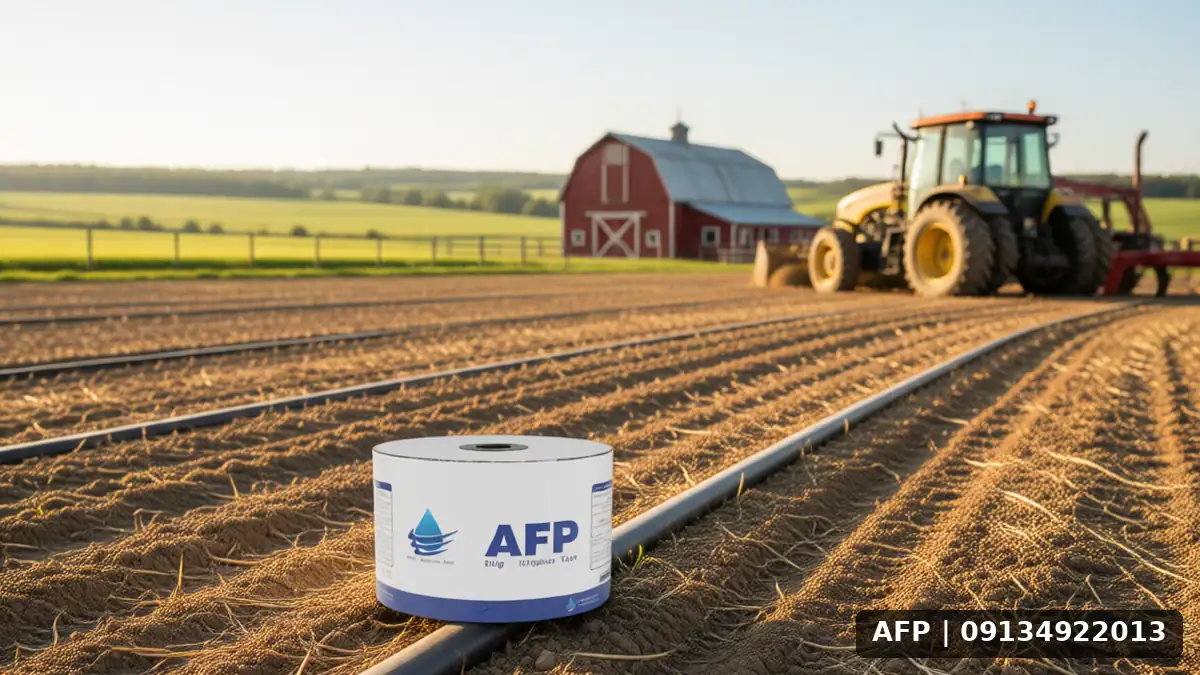
Drip tapes are made from low-density polyethylene (LDPE), which is difficult and expensive to recycle. The most effective recycling method is usually to deliver them to agricultural plastic recycling centers for use in other plastic production lines.
Conclusion and Final Recommendations
Use of drip tape 20 cm roll 1000 m It requires precision in initial calculations. By carefully measuring line spacing, considering site conditions, and selecting standard connectors, you can ensure an irrigation system that optimizes water use and guarantees the economic performance of your farm. Do not forget that filter maintenance and regular draining of the tapes are key to extending the system’s useful life.
Finally, it is crucial to consider environmental factors and the specific crop type. If you intend to cultivate crops such as purple squash, which require specific spacing and continuous water supply, you can refer to the Squash Performance per Hectare guide to align irrigation parameters with the crop’s root requirements. Success in drip irrigation lies in combining technical knowledge with precise field execution.