Comprehensive Guide to Buying 160mm Ribbed HDPE Piping: Selection Criteria and Cost Analysis
Why is a 160 mm ribbed pipe essential in modern irrigation systems?
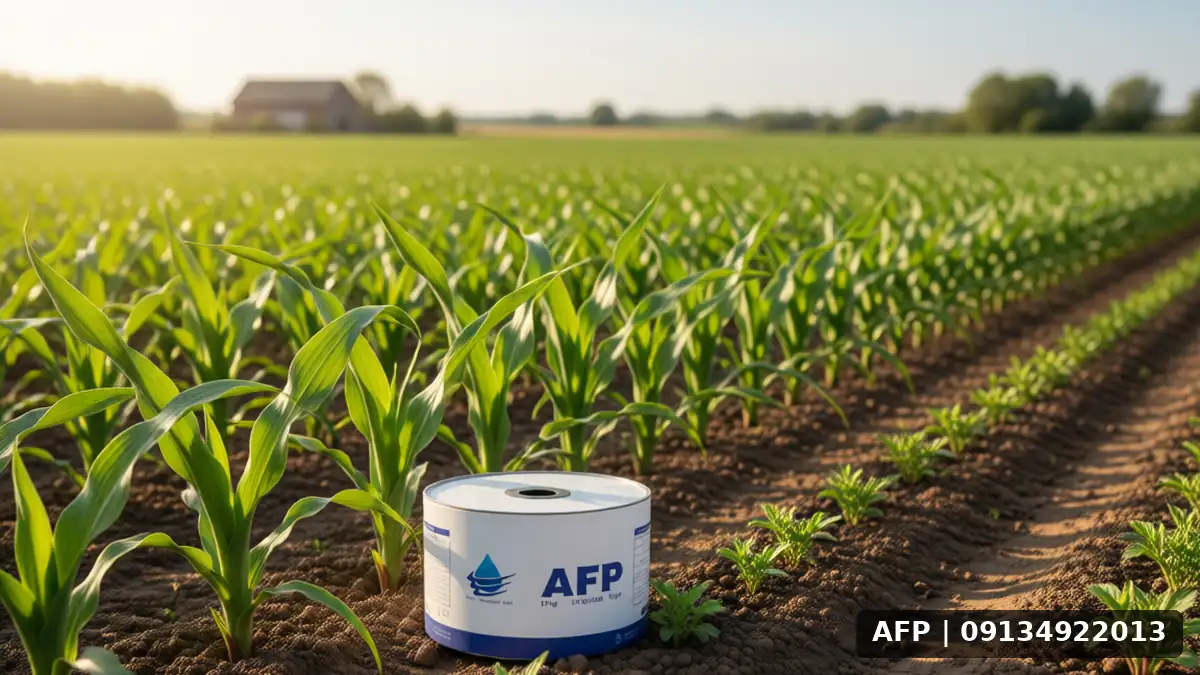
In centralized irrigation systems, such as drip and trickle, the efficient transfer of water from the collection point to the farm’s main lines is of vital importance. 160 mm ribbed pipe (equivalent to 6 inches) is one of the most commonly used sizes for main lines in medium to large farms. This pipe offers the advantage of easy relocation and rapid installation in agricultural fields due to the combination of adequate mechanical strength and relative flexibility. Unlike metal or rigid pipes, this type of pipe has a ribbed (fabricated) texture, which reduces its sensitivity to earthquakes or vibrations caused by water pressure changes and provides a longer service life.
The correct selection of this pipe requires an understanding of crop types and field operations. For example, in small-grain crops such as broccoli tip drip or corn cultivation, water flow management is generally more optimal with larger sizes, but for farms with smaller areas, smaller sizes may be sufficient. However, the 160 mm size is a suitable middle ground that provides a good balance between maintenance costs and initial investment costs.
Technical specifications and types of manufacturing materials
Material Type and Chemical Resistance
The Most Important Factor in Purchase 160 mm Pipe with Threadis its material. Two main types exist in the Iranian market: Polyethylene (PE) and Polypropylene (PP). PE pipes generally offer higher resistance to ultraviolet (UV) radiation and temperature changes, making them a better option for outdoor use and direct sunlight. In contrast, PP pipes may be less expensive but perform poorly under long-term weathering. Chemical resistance to fertilizers and pesticides injected through the irrigation system must also be checked. Some pipes feature anti-UV layers; it is recommended to use this model if the pipe is to be permanently placed at ground level.
Wall Thickness and Operating Pressure
Pipe wall thickness directly affects its allowable operating pressure. Pipes with a thickness of 2.5 to 3.5 mm are typically designed for operating pressures of 4 to 10 bar. If your irrigation system has a high-powered pump or the terrain slope causes pressure to increase at the end of the line, you should select a pipe with a greater thickness (e.g., 4 or 5 mm) to prevent sudden bursting. Always refer to the pressure charts labeled in “mmWC” (millimeters water column) on the pipe packaging.
Key Criteria for Selecting the Right Pipe
Comparison with other rigid and flexible pipes
One reason for the popularity of threaded pipes is their rollable (coiled) feature. This characteristic facilitates transportation to remote farms and enables faster installation. Compared to metal pipes (cast iron or steel), plastic threaded pipes are lighter and are connected using special coupling kits without the need for welding or joint sealing. This point is particularly important for farmers who use mobile systems.
Fittings and auxiliary components
When purchasing pipes, ensure the availability of fittings compatible with the 160 millimeter size. Fittings should be made of the same plastic material or corrosion-resistant metal. Purchasing pipes without access to standard fittings may cause repair costs to increase significantly or force the use of lower-quality pipes. Fittings include: standard couplings, shutoff valves, flanged inlets and outlets, and high-pressure couplings.
Practical installation and maintenance tips
- Consider the flexibility of the farm layout: Before purchasing, review your farm layout. A 160-millimeter pipe is generally suitable for farms with an area of approximately 5 to 15 hectares. If your farm is larger, you may need a main line with a larger size (such as 200 or 250 millimeters).
- Installation slope: Threaded pipes should not be installed with a steep negative slope, as this can cause water accumulation and reduce flow capacity. The appropriate slope is typically 1 to 5 percent.
- Protecting pipes from sun exposure: If the pipe is left on the ground surface for an extended period, you must use a model containing UV stabilizers or place it underground or under a shade cover.
- Draining water in winter: If you live in a region with cold weather, drain the water inside the pipe before the cold season begins to prevent freezing and bursting of the pipe wall.
Analysis of factors affecting price
The price of threaded pipes is influenced by several variables and should not be determined solely by selecting the lowest-cost option. The most important factor is wall thickness A 160 mm pipe with a 2 mm wall thickness is not more expensive than a 200 mm pipe with a 2 mm wall thickness, but the quality and lifespan differ. Also, Brand name and the presence of domestic standard certifications (such as ICF) affect the price. Reputable brands generally use less recycled material, resulting in a longer useful life.
Other factors such as meters per roll and price per meter are also worth examining. Sellers typically supply pipes in 100 or 200 meter rolls. Purchasing full rolls lowers the cost per meter. Include delivery costs to the farm and connection costs (fittings and kits) in your cost calculations. It is recommended to compare prices by calculating the rate per meter for different wall thicknesses and selecting based on your system’s required operating pressure. Note that using thinner pipes for high pressures will, in the long run, require earlier replacement due to failure, which is a hidden cost often greater than the initial price difference.
Comparison with Alternative Solutions
In some cases, using SDR (Specific Gravity) hoses, which are lighter, is considered a better option for longer distances due to reduced weight and lower stretch resistance. However, classic corrugated hoses remain widely used in many Iranian farms due to their higher flexibility across varying temperature ranges. For specific crops such as drip irrigation of pistachios or drip strip irrigation, the selection of the main line diameter must be calculated based on the number of emitters and row spacing. If the number of emitters in a line is low, a 160mm hose may deliver water at a higher pressure sooner, causing premature wear of the emitters.
Frequently Asked Questions (FAQ)
Can a 160mm corrugated hose be reused?
Yes, provided proper maintenance is followed, these hoses can last for several seasons. Minor ruptures are generally repairable using plastic patch kits. However, if multiple cracks have developed, it is recommended to purchase a new roll.
What are the differences between PE and PP pipes when buying?
PE (polyethylene) is softer, more flexible, and more resistant to UV. PP (polypropylene) is stiffer, may become brittle at low temperatures, and sometimes costs less. For permanent systems located above ground, PE is recommended.
What is the suitable working pressure for a 160 mm pipe?
Depending on the thickness, the working pressure can range from 4 to 12 bar. For most standard drip systems, 4 to 6 bar is sufficient. If your pump has higher capacity, be sure to use a pipe with greater thickness.
Final summary
Buying 160 mm threaded pipe This is a crucial investment in your farm’s infrastructure. Selecting the appropriate thickness, high-quality material, and considering long-term costs is key to the successful performance of your irrigation system. Always purchase from reputable distributors and, if necessary, seek technical consultation to accurately calculate pressure drop and pipe sizing. These measures not only prevent water waste but also increase crop yield and reduce operational costs in future seasons. By carefully reviewing the above points, you can select pipes that best suit your farm’s climatic and economic conditions.
Related articles: Related article Related article Related article D988 Related article, rahnamai mukammali kishti qahvagi tuxmador