Tee Tape Spacing in Cotton Cultivation: Recommended Standards
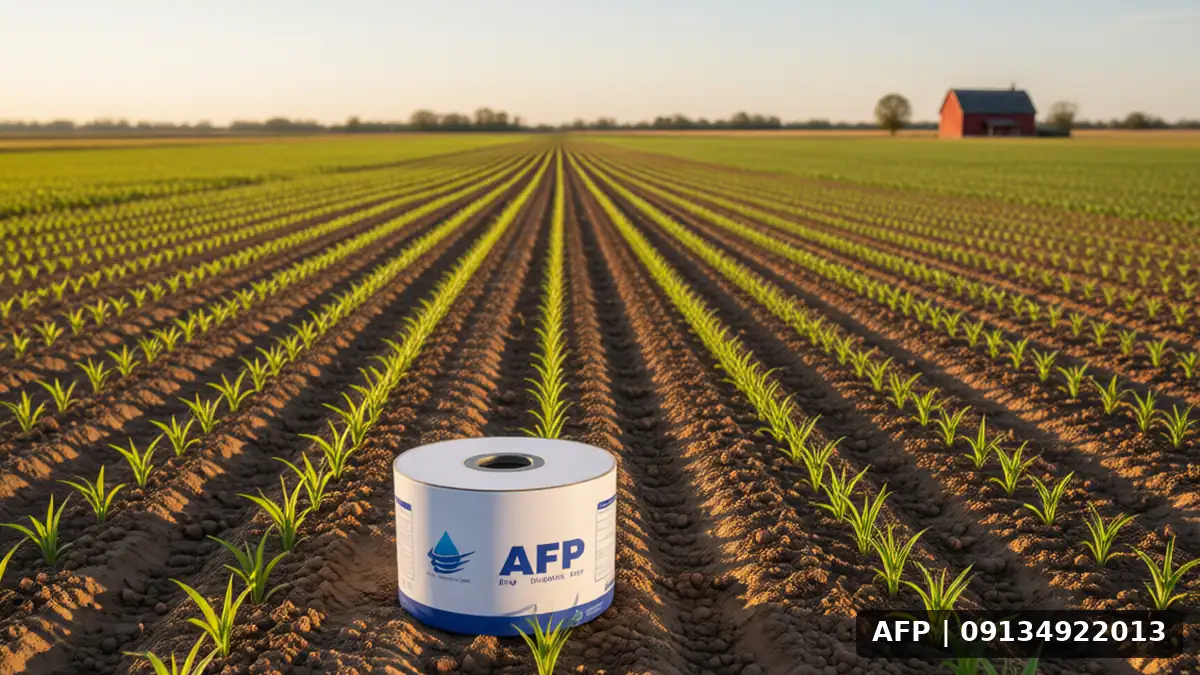
Introduction to the Importance of Tape Line Spacing in Cotton Cultivation
Due to root sensitivity and the need for regular moisture, cotton cultivation is considered one of the most challenging crops for irrigation systems. In drip irrigation with proper tape line selectionthe engineering of line spacing (Spacing) plays a decisive role in soil moisture uniformity and reducing plant stress. Tape line spacing is not merely a geometric parameter; it is a critical variable that directly affects root penetration depth, evaporation rates, and consequently, final crop yield.
Many farmers set line spacing visually without considering cotton root depth and soil type, which can lead to water wastage and reduced fiber and lint quality. In this article, we examine in detail the technical specifications regarding recommended standards for tape line spacing in cotton cultivation.
Technical Standards for Tape Line Spacing Based on Root Depth
Cotton Root Penetration Depth Analysis
The cotton root system is vertical and deep. Based on agronomic studies, effective cotton root depth can range from 60 centimeters to 1.5 meters, depending on the growth stage and soil type. Therefore, tape line spacing must be adjusted to ensure sufficient overlap of the wetted zone at root depth.
The golden standard for tape line spacing in cotton is typically 60 to 80 centimeters . This spacing allows moisture between two lines to reach a significant level at a soil depth of 40 to 50 centimeters. If the spacing is less than 60 centimeters, the risk of waterlogging in clay soils increases. If it exceeds 80 centimeters, portions of the soil between lines remain dry, and surface roots experience stress.
Impact of Soil Type on Line Layout
- Clay soils: Have low permeability. Line spacing should be shorter (50 to 60 centimeters) to allow moisture to move toward depth and space, but irrigation duration should be shorter and more frequent.
- Sandy soils: Have high permeability. Line spacing can be increased up to 80 or even 1 meter, as moisture penetrates deeper quickly. However, the emitter discharge rate must be set higher.
- Loam soils: Are the best option for moisture control. A standard spacing of 70 to 75 centimeters is ideal for these soils.
To better understand the impact of soil variables on orchard management, it is recommended to study key points when using drip tape irrigation.
Drip tape layout patterns: Single-line vs. Double-line
Spacing in Single-line layout
In a single-line system, one drip tape is placed in the center or beside the cotton rows. If the tape is placed in the center of the row, the distance from the tape to the row center (e.g., 40 centimeters) must be calculated precisely. In this configuration, the spacing between adjacent rows (Row Spacing) must be at least 1.2 to 1.4 meters to allow mechanized plowing and spraying without damaging the tapes.
Spacing in Double-line layout
For denser planting with higher land productivity, double-line tapes are used. In this system, two drip tapes are placed on either side of the plant in each row, spaced 30 to 40 centimeters apart. The spacing between tapes in adjacent rows must be 1.5 to 2 meters. This layout provides more uniform water distribution around the root zone and reduces temperature stress.
Practical tips for installing and adjusting drip tape spacing
Accuracy in drip tape spacing is critical not only during planting but also during installation and maintenance. First, map the orchard or field layout on the ground to prevent misalignment of the lines. Even a 10 cm deviation can cause one-sided drying of the root zone.
- Using spacing hooks: When laying pipes, use special drip tape hooks to maintain the precise distance between the tape and the soil.
- Alignment with the Planter: If you use mechanized planters for cotton seed sowing, the drip tape spacing must exactly match the planter’s hole spacing.
- Checking system pressure: Changes in irrigation system pressure affect the wetting length of the drip tape. Always design the tape spacing based on the system’s actual working pressure.
To select appropriate drip tape spacing based on water requirements, studying the cost of drip tape per hectare can help with accurate budgeting. Additionally, precision in adjusting the ground irrigation system per hectare is another factor influencing the recommended spacings in this article.
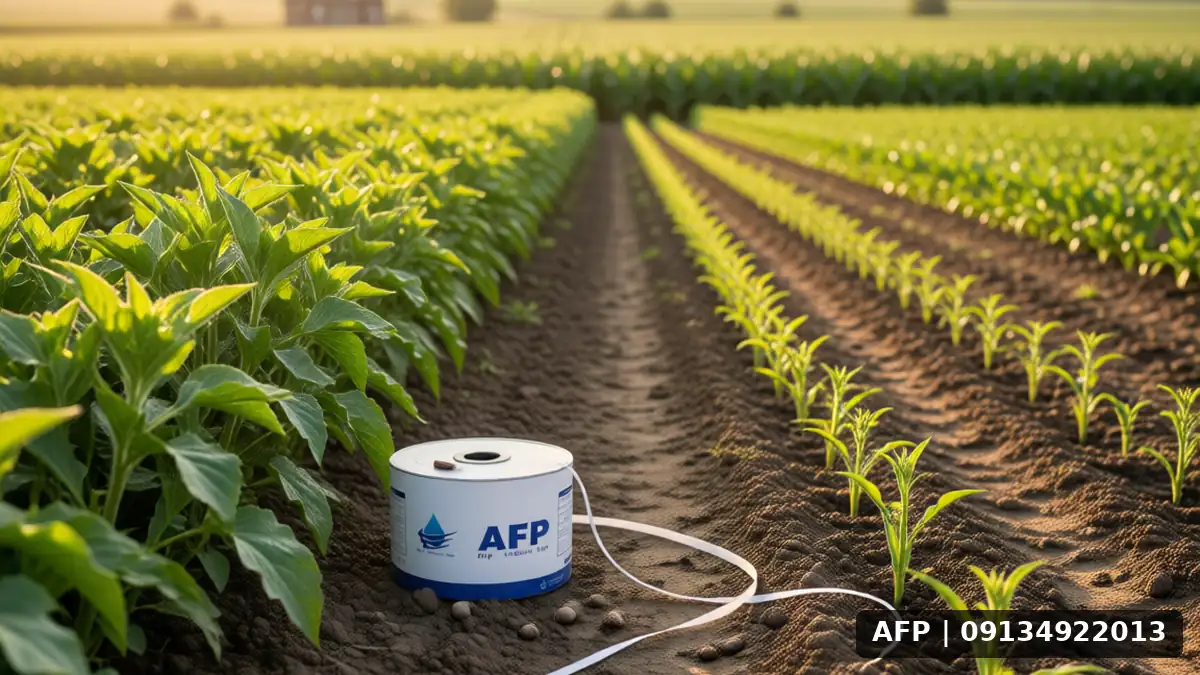
Impact of tape spacing on cotton yield and quality
Research shows that optimizing drip tape spacing can increase cotton fiber yield by up to 15%. When drip tape spacing exceeds standard limits, cotton plants must expend more energy growing lateral roots to access moisture, which is detrimental to fiber quality.
Beyond cotton, general principles for drip tape layout apply to other deep-rooted plants. For example, in orchards or other industrial crops, similar principles apply to calculating flow rate and spacing. You can compare the deep roots of white beans and cotton regarding water uptake by reviewing the seed rate for white beans per hectare. Both plants require precise management of deep soil moisture.
Frequently Asked Questions (FAQ)
1. Is drip tape spacing constant for all growth stages of cotton?
Yes, the physical spacing of the tape does not change, but the irrigation schedule (flow rate and duration) must be adjusted. In early growth stages, lower flow rates and shorter durations are recommended to avoid stressing young roots.
2. If my soil is very sandy, should I increase the tape spacing?
No, not necessarily. In sandy soils, water infiltration is rapid. If you increase the spacing, superficial root zones may dry out. It is better to maintain a spacing of 60 to 70 cm and use high-flow tapes (e.g., 4 liters per meter per hour).
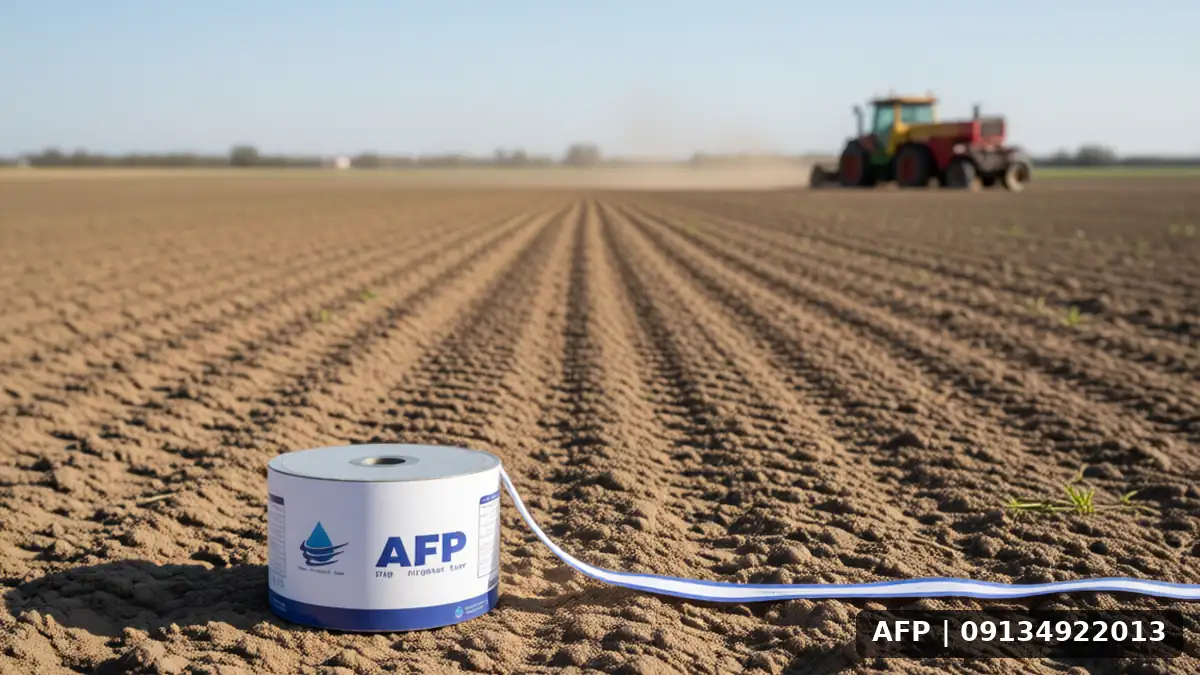
3. At exactly what depth (in centimeters) should the drip tape be placed?
The standard depth is 5 to 10 cm. Greater depth prevents moisture from reaching the main roots, while shallower depth causes rapid evaporation and damage to the tape by surface activities.
Conclusion
Determining drip tape spacing in cotton cultivation is a precise engineering process involving soil knowledge, plant growth stage, and irrigation system pressure. Adhering to standard spacings of 60 to 80 cm and regular layouts is key to achieving high-quality cotton with minimal water consumption. Always use high-quality tapes with a UV-blocking layer to extend their lifespan to more than one season. If further consultation is needed on ancillary equipment, refer to the comprehensive guide to green clove cultivation or other specialized articles on the site, which can help better understand planting and layout principles.
Related articles: Related article Related article Related article D8AFD8B1 Related article, Related article Related article D8AFD8B1 Related article Related article D8A7D8B2 Related article Related article D8A2D8A8