PVC Tip Line Cost on the Farm: A Comprehensive Budget Estimation Guide
Introduction: The Importance of Planning the Cost of Magnetic Drip Tape
For every farmer and farm manager, managing initial costs in irrigation projects is of paramount importance. Among the various magnetic irrigation methods, magnetic drip tape is considered a popular choice for row crops such as corn, watermelon, and cucumber due to its high water-use efficiency and yield increase. However, one of the main challenges is the lack of transparency in accurately estimating the cost of magnetic drip tape which can lead to budgeting disorganization. In this article from Magnetin, we aim to help you estimate these costs realistically by examining all technical and economic parameters. Our goal is to provide a practical roadmap so you can be confident about the total cost of your irrigation system before purchasing.
Key Factors Affecting the Cost Estimation of Magnetic Drip Tape
The final cost of magnetic drip tape is not a fixed figure and depends on a set of technical and economic variables. Understanding these variables is the first step toward an accurate estimate. We categorize these factors into two main groups: internal (product features) and external (market and farm conditions).
1. Technical Specifications of Drip Tape
- Wall Thickness: Thicker drip tapes (e.g., 1 mm) demonstrate greater resistance to wear and pressure and have a higher price. Thinner tapes (e.g., 0.8 mm) are cheaper but have a shorter lifespan.
- Emitter Spacing (Emitting Points): The distance between water discharge points affects Darcy flow and effective coverage. Tapes with closer spacing are generally more expensive but provide more uniform distribution.
- Tape Width: The standard width is often 16 to 25 mm. Selecting the appropriate width based on row planting directly affects the required length of tape and, consequently, its cost.
2. Field and Geographic Variables
Land area, slope, and soil type determine the total length of belts required. Larger farms may benefit from scale economies in bulk purchasing. Additionally, using perforated belts (with holed or tip belts) differs from solid belts (single layer); perforated belts are more expensive due to the two-layer construction but provide greater protection against clogging by plants.
Analogy and economic comparison with other systems
To better understand the value of perforated tip belts, a comparison with other irrigation methods is essential. While flood irrigation may have a very low initial cost, its long-term operational costs due to water waste and labor are generally higher than tip belts. Conversely, rigid pipe drip systems (Hard Pipe) have significantly higher installation and maintenance costs. Perforated tip belts sit in the middle, providing a suitable balance between initial capital expenditure (CAPEX) and operational expenditure (OPEX). Although Garlic yield per hectare directly depends on irrigation quality, but selecting the appropriate tip belt can impact final performance by reducing water stress.
Practical methods for accurate budget estimation
To move beyond rough estimates and arrive at a precise budget table, follow these steps. This simple yet effective formulation is:
- Calculating the required drip tape length: First, calculate the field area. Then, based on row length and row spacing, determine the total length of drip tape needed. Simple formula: Field length × Number of rows = Drip tape meters. Always add a 10–15% waste allowance for fittings and cuts.
- Unit price inquiry: Prices are quoted per meter or per roll (500 or 1000 meters). Please note that prices fluctuate with exchange rates and raw plastic costs; always request the latest quote.
- Cost of acquiring accessories: The cost of labeled drip tape without calculating filters, manifolds, solenoid valves, and fertigation systems is incomplete. These items typically account for 15–30% of the total drip tape cost.
When selecting drip tape, review the guide Tips before purchasing drip irrigation It can prevent costly and incorrect purchases. Additionally, paying attention to the flow rate at outlet points is important; drip lines with high flow rates result in higher pumping costs.
The Impact of Crop Type on Drip Line Selection and Cost
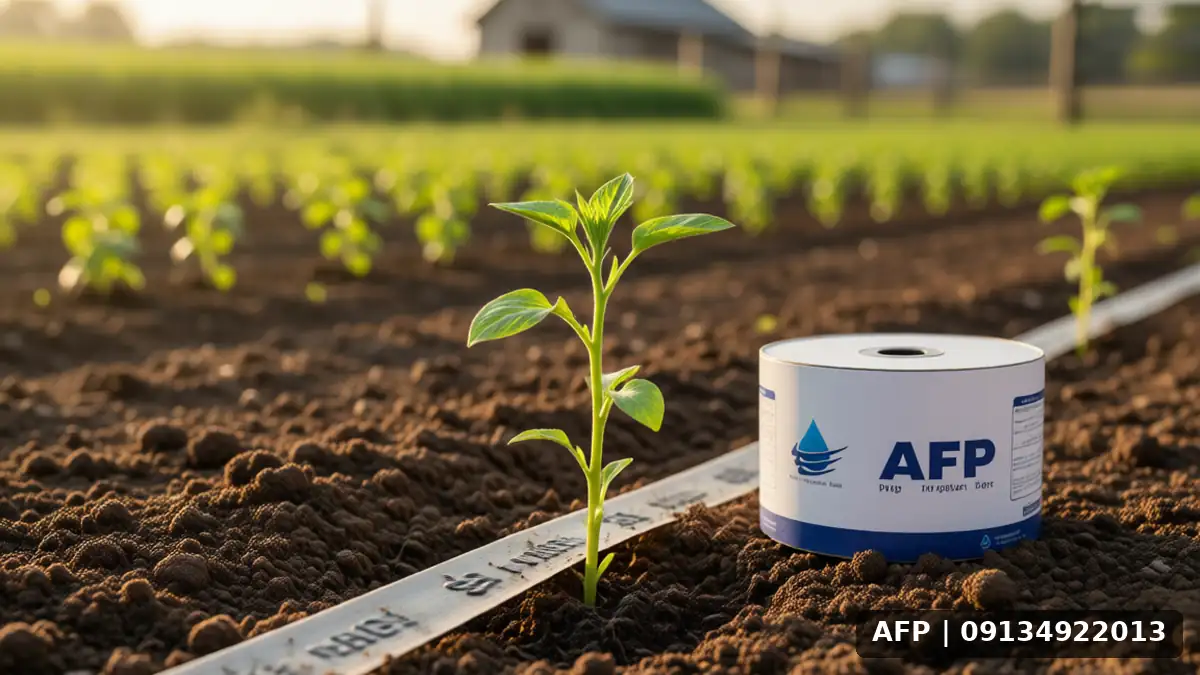
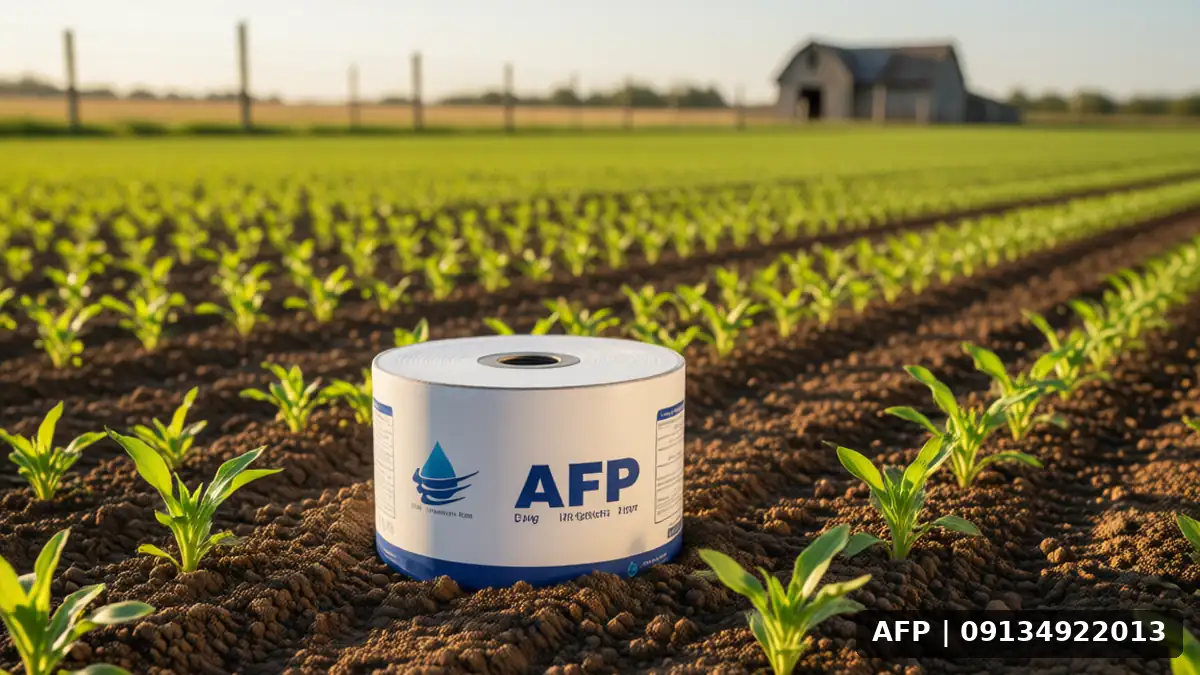
The choice of crop directly affects the technical specifications and, consequently, the cost of the AFP branded drip line. For example, in corn cultivation, which is sensitive to continuous and precise water supply, using drip lines with appropriate flow rates and high mechanical resistance is a priority. Also, knowing the seed rate required per hectare is vital for calculating plant density and, as a result, the number of drip lines needed. In this regard, familiarity with the corn seed rate per hectare helps optimize row spacing and, ultimately, drip line usage. Remember that the more optimized the planting density, the better the coverage of the AFP drip line by active plant roots, and the higher the return on investment in the AFP branded drip line cost becomes.
Golden Tips for Reducing Hidden Costs
Most farmers only consider the price of the drip line, but hidden costs such as failures due to breakdowns, filter clogging, and the cost of retrieving the drip line at the end of the season can disrupt economic balance. To prevent these damages:
- Use of an appropriate fertilizer injector and filter: Clogging of emitters is the main enemy of drip tape. Investing in a sieve filter with small openings significantly reduces repair and replacement costs.
- Quality of connection joints: Use standard fittings. Handmade connections are often the point of failure in the system and impose continuous replacement costs.
- Proper packaging: If storing drip tape for the next season, proper packaging ensures protection from direct sunlight, extends the lifespan of the tape, and prevents the cost of repurchasing next year.
In other grain crops such as cotton or beans, understanding the required seed quantity is essential for calculating irrigation scheduling. For example, familiarity with red bean seed rate per hectare It helps you estimate the planting distance and determine the required number of drip lines. This coordination between planting and irrigation is the key to optimizing the cost of tagged drip irrigation.
Frequently Asked Questions (FAQ)
Is tagged drip irrigation expensive or cost-effective?
Although the initial cost is higher compared to conventional pipe drip irrigation, the savings in water usage (up to 40-50%) and the increase in crop yield typically guarantee a return on investment within one to two growing seasons. Therefore, it is highly cost-effective in the long term.
How do we accurately estimate the cost of tagged drip irrigation?
Use the formula: Number of rows x Field length x Waste factor x Price per meter. Then add the cost of filters, valves, and fittings with a 20 to 30 percent margin. Prices fluctuate, so obtain the latest quotation.
What is the difference between tagged drip lines and conventional drip lines?
The flanged strip has a two-layer structure, with the inner layer protected by the outer layer. This design prevents holes from being pried open by plant roots or broken by tools. In contrast, a tip strip is a single-layer perforated tube that may leak or tear if directly contacted by roots or subjected to pressure. Flanged strips are more robust but have a higher cost.
Can flanged tip strips be used for multiple seasons?
Tip strips are inherently consumable components, and manufacturers recommend collecting and replacing them each season. Although they may last two seasons with high care, performance degradation and clogged exit points mean annual replacement costs should be included in the budget.
Conclusion: An Informed Investment in Drip Irrigation
Estimating the cost of flanged tip strips on a farm is a dynamic process that requires attention to product technical details, field conditions, and market fluctuations. By following our comprehensive guide, you can avoid hidden costs and develop an accurate and realistic budget. Remember that selecting the appropriate tip strip is only half the journey; the other half is proper system management, from filtration to watering schedules. Investing in flanged tip strip costs accurately ensures higher yields, reduced plant stress, and ultimately greater profitability for you as a farmer. Maghnetin is always by your side, providing specialized information and access to related articles such as Watermelon seed tonnage per hectare: Influencing factors + methods for increasingWe will pave the way for your journey toward smarter and more profitable farming. With proper planning, every Rial spent on branded drip lines will add value to your crop.