2-Inch (63mm) Collapsible Hose Farm Costs: Comprehensive Budget Guide
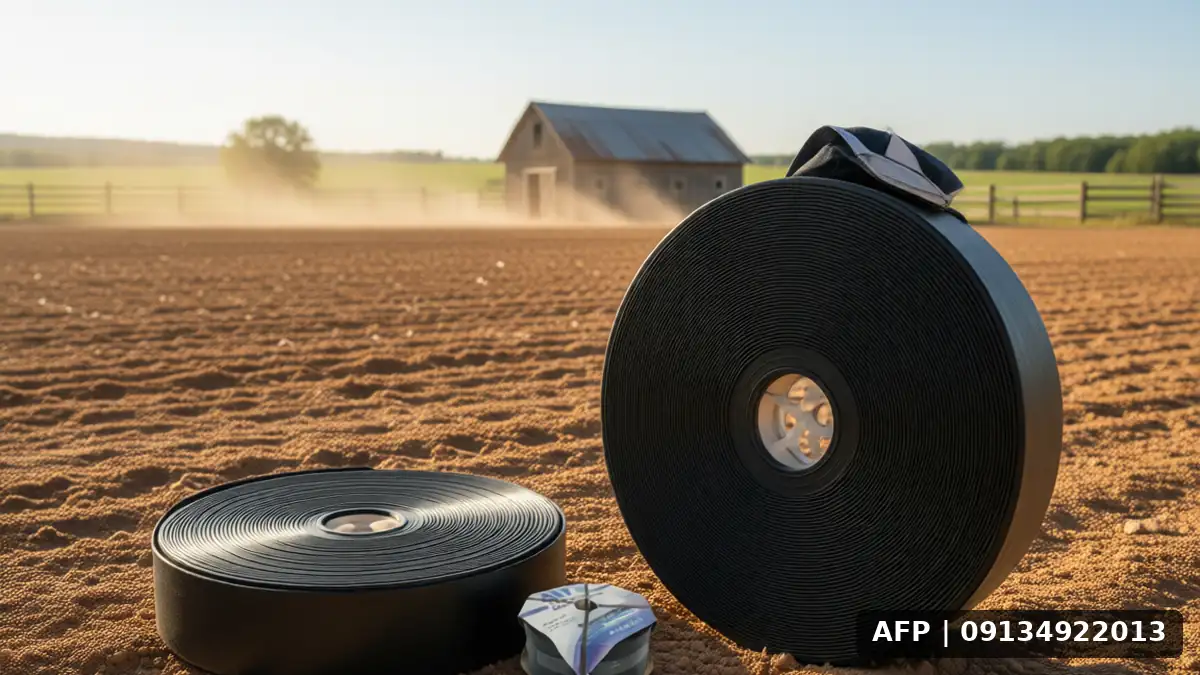
The cost of 2-inch flexible hose is one of the main concerns for farmers and irrigation system designers. Many believe that the price per roll is fixed, but in reality, the final cost depends on several factors, including farm size, cropping type, operating pressure, and even the season of purchase. In this section, instead of providing fabricated statistics, we aim to reconstruct an analytical framework that allows you to estimate the actual cost of your project based on these variables.
2-inch flexible hose (equivalent to 63 millimeters) is typically used as the main line or header in strip-till and drip irrigation systems. This size is highly popular due to the appropriate balance between flow capacity and cost. However, why is estimating its cost difficult? Because flexible hose, unlike rigid PVC or HDPE pipes, has more physical variables that affect the total landed cost.
Factors influencing the final cost of 2-inch flexible hose
To properly understand your budget, you must know that the price tag on the box is only a small part of the story. Below, we examine the most important variables that affect the cost of 2-inch flexible hose on your farm.
Total system length and farm aspect ratio
Your farm model (elongated rectangular or near-square) directly impacts the amount of hose required. A 5-hectare farm with dimensions of 100 meters by 500 meters requires a different pipe network configuration than a farm with dimensions of 250 meters by 200 meters. Although the area is the same, the total length of water distribution lines (laterals) and the main line may be shorter in the latter case, meaning reduced hose consumption and lower total system costs.
Quality factor and wall thickness
Flexible hoses are available in various thicknesses (e.g., 1.6, 1.9, and 2.4 mm). Selecting a thinner gauge to reduce initial costs increases the risk of rupture and leakage. The cost of replacing a damaged pipe in subsequent years can erode a significant portion of your profit. Therefore, the “cheapest” option is not necessarily the “best cost”; it is about the “best value.” For a more detailed assessment of principles for selecting appropriate piping based on soil and water conditions, you can refer to Celery drip tape and other specialized articles that cover more technical details.
Practical calculation for estimating costs in the farm budget
How can a logical figure be determined for the annual budget? We propose a simple method consisting of three steps. First, calculate the total meters of pipe required. Second, determine the cost per meter (including pipe and fittings). Third, apply non-fixed coefficients for ancillary costs.
Step One: Calculating Pipe Length
- Main Lines: Typically, one main line is installed along the length of the farm. Length = Farm length + Length of the water inlet path from the source.
- Laterals: The number of laterals is determined by the spacing between crop rows. Total lateral length = (Number of rows) × (Field width).
- Slack: Always add 5 to 10 percent to the total pipe length to avoid shortages in case corrections or reconnections are needed.
Step Two: Pricing and Factors
Market prices fluctuate. Instead of seeking real-time prices, use a ‘safe assumption’. For example, if you estimate the price of 2-inch flexible pipe at X TOM per meter, calculate the total cost as follows:
$$
Total Cost \approx (Total Meters \times X) \times 1.15
$$
The 1.15 factor includes a 15 percent allowance for fittings, valves, filters, shut-off nozzles, and unforeseen costs. This factor ensures you proceed with a safety buffer.
Key Points for Reducing Costs in Irrigation Projects
The cost of 2-inch flexible pipe is only part of the equation. By following the points below, you can prevent budget overruns:
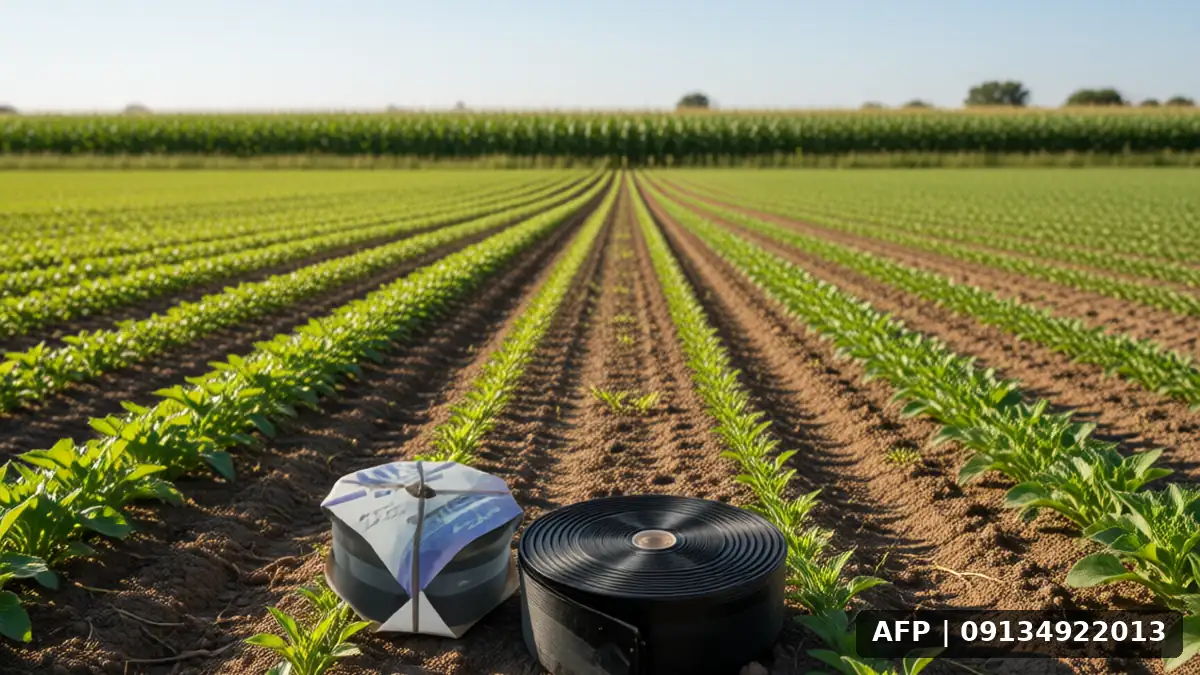
- Water recycling: If your system allows for the recycling of wastewater, you can reduce the total volume of water required and, in the long term, lower water extraction and pumping costs. This is directly related to water resource management, which is explained in more detail in the article on water quantity per hectare.
- Using standard fittings: The use of non-standard fittings in sub-zones can create pressure bottlenecks, leading to increased pump consumption and higher operational costs. Standardized fittings keep piping costs consistent while reducing hidden costs.
- Purchase timing: Buying pipes during the rainy season, when manufacturers are trying to clear their inventory, usually results in better rates. Additionally, bulk purchasing with neighboring farms can reduce transportation costs.
In addition to pipe costs, maintenance expenses should not be overlooked. Drip irrigation systems require regular care and cleaning. Maintenance costs can be up to 10 percent of the initial cost in the first few years. For information on this aspect, see the article Drip line maintenance cost This is a good source for further reading.
Frequently Asked Questions (FAQ)
Is a 2-inch flexible pipe suitable for heavy crops like corn?
Yes, but with a condition. If the distance between drip lines and the main pipe is less than 50 meters, the 2-inch pipe will provide flow without problems. For very long farms, you may need to split the main pipe into two parallel branches, in which case the cost strategy and network design will change. Also, for crops that require precise moisture management, such as tomatoes, accuracy in the input pressure to the main pipe is critical.
How can I ensure that the calculated cost includes installation costs?
In our estimates, installation costs are usually calculated as “labor hours” or “laid meters.” If you are installing it yourself, your relevant costs are only materials (pipe, fittings, filter) and tools. If you use external labor, you must add labor costs to the previous total. A golden rule: labor costs are usually between 20 and 30 percent of material costs.
What is the difference between flexible pipe and PVC pipe in final cost?
Rigid PVC pipe has a higher cost but offers a longer lifespan against UV radiation (when used above ground) and mechanical damage. Flexible pipe (drip tape) is designed for in-ground use or within sleeves, and its cost per meter is generally lower, provided it does not experience cyclic operating pressure. For comprehensive guidance on selecting suitable materials, the article Importance of site inspection for polyethylene pipes is useful.
Is it economical to buy second-hand pipe?
For polyethylene flexible pipe, purchasing second-hand material is generally not recommended. Invisible micro-fractures can cause severe leaks and reduced water efficiency during spring and summer seasons. The cost of wasted water and crop yield loss quickly offsets and exceeds the savings from buying second-hand.
Conclusion and next steps
Estimating the cost of 2-inch 63-millimeter flexible pipe is a dynamic process. You cannot apply a fixed figure to all farms. Instead, you must build a specific estimation model by analyzing your farm dimensions, soil type, and water resources. Key points include always including a buffer for hidden costs and not sacrificing material quality for low price. Considering seasonal price fluctuations, it is best to plan your purchase for late spring or early summer to optimize against volatility. Proper irrigation is not just an expense; it is an investment that is returned in your final crop yield.
If you are looking for guidance on optimizing water use in other strategic crops, study methods to increase tomato yield per hectare which can expand your understanding of the correlation between irrigation systems and crop economics. Ultimately, successful cost reduction begins with precise design and systematic execution, not through rushed estimations.