Comprehensive AFP Irrigation Guide: Principles, Calculations, and Practical Tips
Introduction to Deficit Irrigation
Deficit irrigation is one of the methods for precise water resource management. Its objective is to provide the optimal amount of water needed by the plant at the right time without wastage through conveyance losses, evaporation, or excessive deep percolation. Unlike complex drip systems or tape-line hoses that require pressure infrastructure and continuous piping, deficit irrigation is based on mathematical calculations and an awareness of soil water-holding capacity and weather conditions. This method is highly attractive for farmers with limited water sources or who prefer to reduce equipment costs. In this comprehensive guide, you will become familiar with its technical fundamentals, key formulas, and practical notes. Many small and medium-sized farmers in Iran use this method due to its ease of implementation and lower costs compared to pressurized systems, but success requires a deep understanding of the water cycle in soil.
Technical and Computational Principles of Deficit Irrigation
The core of deficit irrigation lies in accurately calculating ‘Water Requirement’ (ETc) and ‘Root Zone Soil Water Capacity’. These two variables play a critical role in determining the amount and timing of irrigation. To perform these calculations, farmers must pay special attention to meteorological data, soil type, and their own crop preferences. A useful source for better understanding the balance between yield and resource management is familiarity with Lettuce Yield per Hectare , because understanding the final yield helps us estimate the amount of irrigation water needed to achieve that yield. Accurate calculations require continuous monitoring and should not be based solely on a fixed schedule but must be adjusted according to the actual condition of the soil.
Calculating Flow Rate and Irrigation Duration
The appropriate discharge for furrow irrigation is typically determined based on the water infiltration rate into the soil. If the discharge exceeds the infiltration capacity, water is lost through surface evaporation or percolates into deeper layers beyond root reach. To calculate the water volume required per irrigation event, use the following formula: Water Volume = (Active Root Depth × Difference in Available Water Capacity) × Area. These calculations must be adjusted according to soil type (sandy, clayey, or silty) and season. In sandy soils, high permeability necessitates frequent irrigation with smaller volumes, whereas clayey soils require less frequent irrigation with larger volumes. Understanding the hydraulic differences among soil types is the key to preventing water waste.
Difference between furrow irrigation and pressurized systems
Many farmers hesitate when choosing between pressurized systems such as drip irrigation and furrow methods. Furrow irrigation does not require powerful pumps or drip tapes operating at specific pressures, resulting in lower initial and maintenance costs. However, pressurized systems can offer more precise control over plant root zone moisture. To understand the structural and functional differences, studying the difference between sewn lateral drip lines and plate-mounted systems can deepen your understanding of various irrigation systems. In the furrow method, managing drainage channels or ditches is crucial to prevent water accumulation. These systems are a notable option for mountainous farms or areas with limited access to pressurized networks. Additionally, the lack of need for complex filtration is another advantage of this method, as it reduces the risk of clogging.
Application in specific crops
Each tree or shrub crop responds differently to water stress. For example, in the cultivation of grain legumes such as lentils, water management requires high sensitivity. To better understand resource management in similar crops, you can use methods for increasing lentil yield per hectare , some sections of which are dedicated to appropriate irrigation. Deficit irrigation for these crops can be effective when water resources are limited and the farmer wants to maintain acceptable yield at a lower cost. However, in moisture-sensitive crops such as tomatoes, this method must be controlled with greater precision to prevent uneven irrigation. Additionally, in pistachio and almond cultivation, which are sensitive to water stress, accurate ETc calculations are essential to ensure crop quality.
Practical tips for implementing deficit irrigation
Successful implementation of deficit irrigation requires attention to operational details. Here is a list of key points to improve performance:
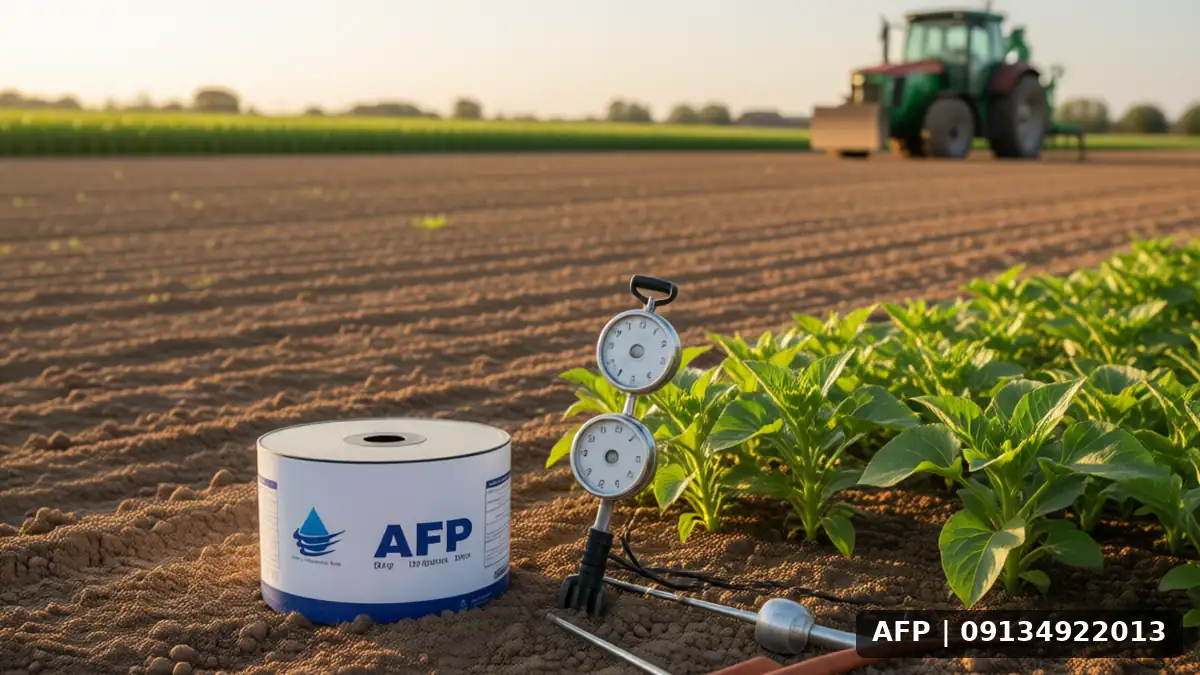
- Utilizing node-type soil moisture sensors: Using simple tools to estimate soil moisture at different depths before irrigation.
- Irrigation Timing: Ideally, it should be done in the late afternoon or early morning to reduce evaporation.
- Preventing Waterlogging: Ensure that irrigated areas are not submerged for extended periods to prevent root hypoxia and fungal diseases.
- Water Leakage Management: Water transfer channels must be lined or covered with appropriate materials to prevent leakage over long distances.
Adaptation to Climate Conditions
In dry and hot regions, the intervals for micro-irrigation should be shorter to prevent plant heat stress. In humid regions, this method can increase the risk of root diseases, and therefore, pressurized systems may be a better choice. Familiarity with the challenges of irrigation in different areas, such as Drip irrigation of onions in Iraq, it can provide you with a broader view of how irrigation methods adapt to local conditions. Comparing regional experiences helps farmers align their calculation parameters with field realities.
Frequently Asked Questions (FAQ)
Is sprinkler irrigation suitable for all crops?
Not necessarily. This method is more suitable for crops with shallow root systems and moderate water requirements. For industrial trees with high water needs and deep root systems, drip or spray systems typically operate more efficiently and precisely. The choice of irrigation method should be based on farm economics and resource availability.
What is the role of meteorological data in the accuracy of sprinkler irrigation?
Meteorological data, particularly reference evapotranspiration (ET0), is the primary variable in calculating crop water demand. Ignoring these data can result in over- or under-irrigation. Strong winds and high temperatures directly affect water losses and must be included in the final formulation.
Can drip irrigation be combined with deep planting?
No, drip irrigation is inherently designed for surfaces with controlled permeability. For deep planting, other methods such as deep flooding irrigation must be used. Combining this method with deep rooting requires specific adjustments in channel structure.
Conclusion and next steps
Drip irrigation is a simple, low-cost, and practical method for water management at small to medium scales. Its success depends on calculation accuracy, in-depth knowledge of soil and plants, and continuous monitoring. Use scientific data and local experience rather than relying solely on intuition. For farmers choosing an appropriate irrigation system for specific crops, studying relevant cases such as parsley cultivation and harvest guide per hectare can facilitate better decision-making. Ultimately, combining drip irrigation knowledge with other optimal methods can lead to water resource sustainability and increased farm economic efficiency. Choose wisely and make the best use of every drop of water. Investment in training and monitoring will yield a double economic return in the long term.