Comprehensive Guide to Seedling Onion Planting with Drip Irrigation: Boosting Yields and Precise Resource Management
Introduction to Precision Management of Onion Set Planting
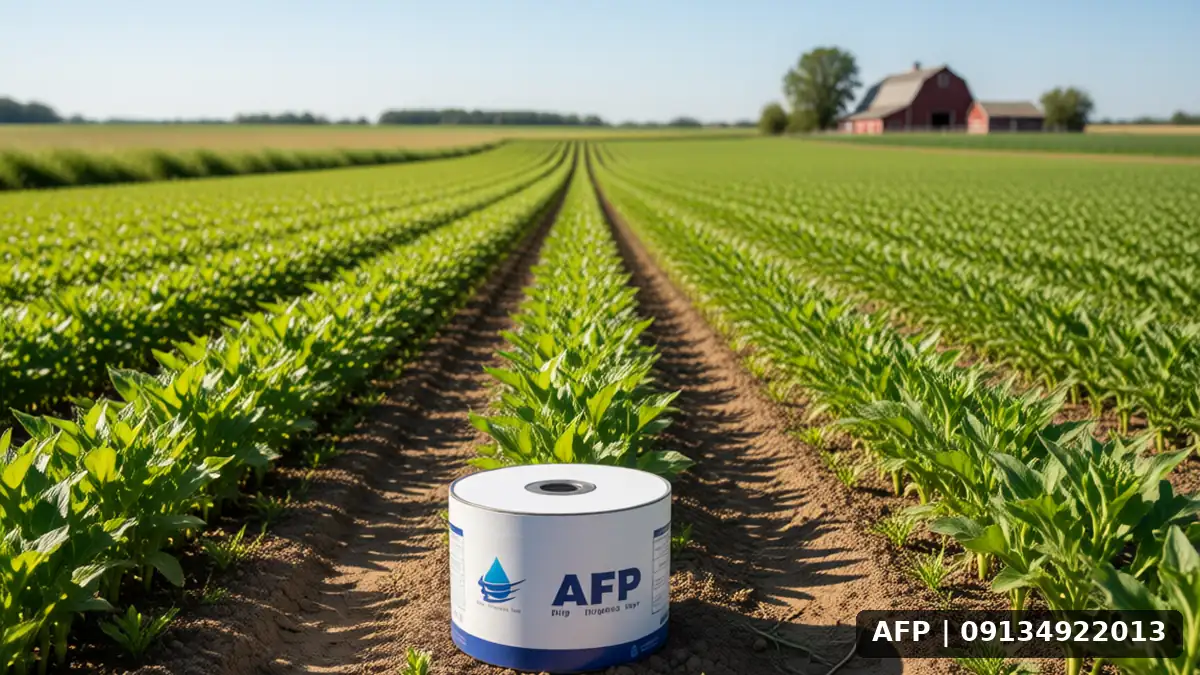
Onion is a vegetable sensitive to temperature and humidity, and its final quality is highly dependent on the direct planting of onion sets and irrigation management during the initial weeks. In recent years, professional farmers have sought methods to reduce human error during planting and ensure uniform distribution of materials. Drip irrigation for onion sets is recognized not only as a water supply method but also as a controllable tool for managing the entire growth and production process. The use of drip tape irrigation combined with corrective techniques makes plant emergence during the planting period more regular and predictable.
In this article, we provide a detailed examination of key variables such as planting depth, drip tape system type, and critical timing schedules during the first weeks. Our goal is to provide a practical roadmap that achieves maximum efficiency in onion set planting with minimum resources. Attention to details such as drip irrigation conditions in the initial stages is the key to crop stability across different climates.
Comparison of Onion Set Planting Methods with Drip Irrigation
To better understand how different systems affect the final outcome of onion set planting, it is necessary to directly compare manual, mechanized, and combined (with drip tape) planting methods. Manual methods often result in inconsistent planting depth; achieving uniform depth per square meter directly impacts the stability of plant emergence in drip systems. When planting depth is inconsistent per square meter, the output rate of drip emitters becomes non-uniform, resulting in inaccurate moisture monitoring.
Drip tape and drip irrigation systems, unlike conventional methods, allow us to keep moisture application uniform and predictable over a one-meter band. These methods significantly increase the initial growth rate of onion seedlings by reducing moisture in the early planting stages. The following table compares these methods and the impact of each on precise planting management for onion seedlings:
As you can see, using drip tape as a pre-planting tool ensures that plant drip application is optimized and uniform across each linear meter. This feature provides a solid foundation for precise drip management throughout the onion seedling growth stages.
Key points: Onion seedling planting depth with drip tape
The planting depth of seedling onions in drip tape directly affects drip stability during the initial weeks. Shallow depths (less than 1.5 cm) cause seedlings to sit directly on the dry soil surface, leading to rapid runoff in the early stages. In contrast, appropriate depths (approximately 2 to 2.5 cm) significantly control runoff, ensuring the plant receives adequate moisture during critical periods.
For seedling onion cultivation with drip tape, a depth of 2.5 cm is recommended. This depth not only maintains constant runoff per linear meter but also minimizes scattered runoff during the planting stages. At this depth, emitters can create uniform runoff throughout the seedling planting process, significantly improving final crop quality.
Seedling Onion Drip Irrigation: Timing and Irrigation Rate
Establishing a precise timing schedule for seedling onion planting with drip tape and drip irrigation is a key factor for success. The planting schedule must be adjusted based on the local climate conditions and the specific timing of the emitters. A regular timing schedule allows for the use of appropriate irrigation rates and runoff levels at each stage of seedling onion planting.
Initial Weeks: Runoff Management for Seedling Onions
During the first three weeks of seedling onion planting with drip tape, plant runoff is significantly higher than in other stages. At this stage, the irrigation rate must be adjusted to ensure controlled and uniform runoff per linear meter. Using emitters with a lower rate (e.g., 1.55 liters per hour) at this stage helps control runoff more effectively and prevents excessive vegetative growth.
In the second and third weeks, seepage decreases and the irrigation rate can be increased to a certain extent. However, controlled seepage per linear meter must still be monitored. An appropriate drip line is configured so that seepage is uniform and predictable. This uniform seepage ensures that onion seedlings receive sufficient moisture at all growth stages, improving final product quality.
Middle to Late Weeks: Seepage Reduction and Yield Increase
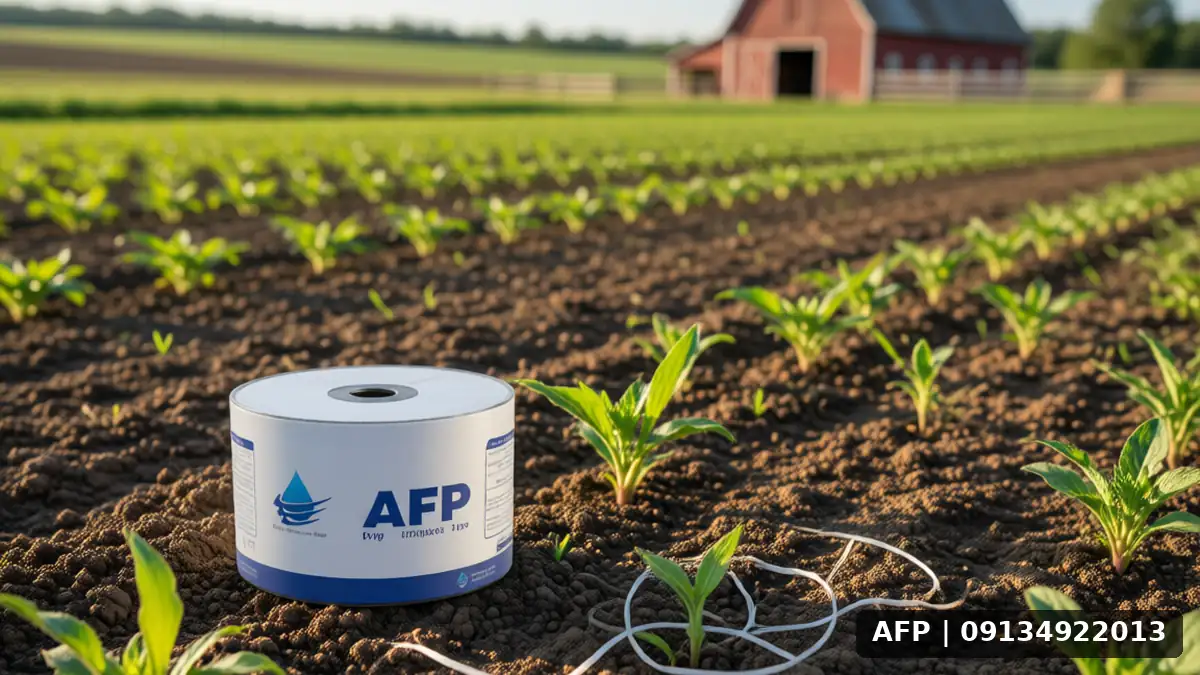
During the middle and late stages of onion seedling planting with a drip line, the main objectives are to reduce seepage per linear meter and increase root mass. In this stage, reducing the irrigation rate naturally lowers seepage, allowing the plant to direct more energy toward root and bulb development. A suitable drip line with variable-rate emitters enables reducing seepage to the desired level, thereby increasing bulb volume and quality.
Practical Tips for Onion Seedling Planting with a Drip Line
To optimize the onion seedling planting process with a drip line, several key practical points must be considered. First, selecting the appropriate drip line is highly important. The drip line must have an appropriate diameter and uniform holes to ensure equal seepage across the entire linear meter. Using low-quality drip lines can cause uneven seepage and ultimately reduce crop yield.
- Drip line with appropriate diameter: For onion seedling linear meters, using drip lines with a diameter of 12 to 16 millimeters is recommended. This diameter provides a good balance between controlled seepage and water flow.
- Uniform holes: The spacing of drip tape holes must be completely identical to ensure uniform and predictable distribution throughout the entire unit length.
- Unit length management: An appropriate unit length for drip tape is installed to ensure controlled and uniform water distribution. This allows us to benefit from optimal delivery during all stages of seedling planting.
Additionally, considering the planting density of muskmelon per hectare can serve as a comparative pattern for managing seedling planting with drip tape and drip irrigation. Both crops require controlled and uniform water distribution, and similar principles are applied to the suitable unit length and distribution management.
Frequently Asked Questions (FAQ)
1. What is the best planting depth for seedlings using drip tape?
The ideal planting depth for seedlings using drip tape should be between 2 and 2.5 centimeters. This depth ensures uniform and predictable distribution within the unit length, allowing seedlings to benefit from sufficient moisture during all growth stages.
2. How can uniform onion seedling establishment per square meter be guaranteed?
Uniform onion seedling establishment per square meter is guaranteed by using high-quality drip tape and emitters with a constant flow rate. Additionally, proper land leveling and suitable square meter spacing for the drip tape are key factors for achieving uniform establishment.
3. Is planting onion seedlings with drip tape and drip irrigation recommended in all climates?
Yes, planting onion seedlings with drip tape and drip irrigation is recommended in most climates, especially in warm and arid regions, due to the controlled and uniform establishment per square meter. This system creates optimal and predictable water distribution, which is highly suitable for onion seedlings.
Conclusion
Planting onion seedlings with drip tape and drip irrigation is a highly effective strategy for precise water management and increased crop yield. Selecting the appropriate planting depth, using high-quality drip tape, and following a precise schedule are key factors for achieving suitable square meter spacing and uniform establishment. By adhering to these points, farmers can achieve controlled and predictable water distribution and ultimately obtain a quality product with adequate volume. Additionally, attention to principles Seed quantity per hectare for onion For other crops, it can serve as a useful reference for managing onion set cultivation using trickle strip and drip irrigation.
Related topics: Related article Related article Related article D8AFD8B1 Related article, na voy hoi navori tip