Drip Tape Corn Cultivation Cost per Hectare: Practical and Economic Guide
Introduction to the Costs of Drip Tape Irrigation for Maize
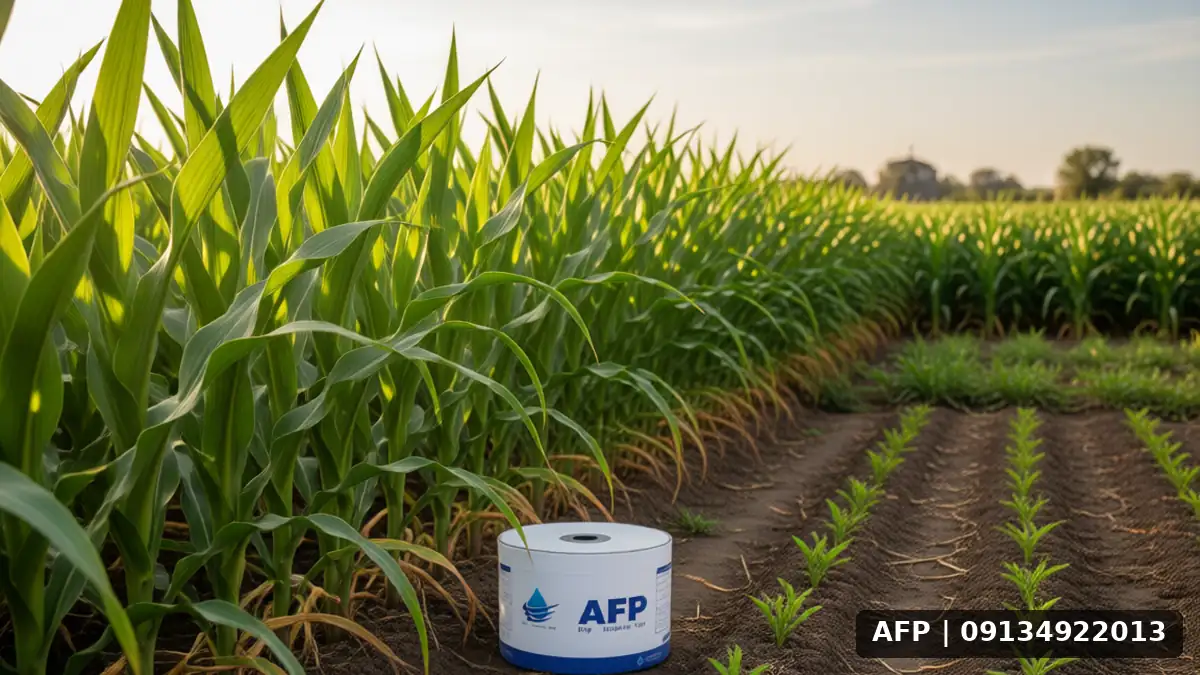
Maize is one of the most important commercial grains in Iranian and many other countries’ agriculture. Due to its high water requirements, selecting an appropriate irrigation system plays a key role in the economic viability of the farm. In recent years, the use of drip irrigation systems, particularly drip tape (Drip Tape), has become a suitable alternative to surface irrigation due to its high efficiency, reduced water consumption, and improved performance. When it comes to the per-hectare cost of growing maize with drip tape , farmers should consider not only the price of irrigation equipment but also the entire production cost chain, including land preparation, seed, fertilizer, labor, and harvesting.
The objective of this article is to provide a comprehensive and transparent overview of the cost structure for growing maize with the drip tape system. Rather than providing fixed prices that are subject to seasonal changes and inflation, we will focus on analyzing the main cost components and optimization methods so that you can have a more accurate estimate of your required budget.
Main components of maize production costs with the drip tape system
To accurately understand the production costs of corn using the drip tape system, costs must be categorized into fixed and variable expenses. The details of these factors, along with optimization strategies, are provided below:
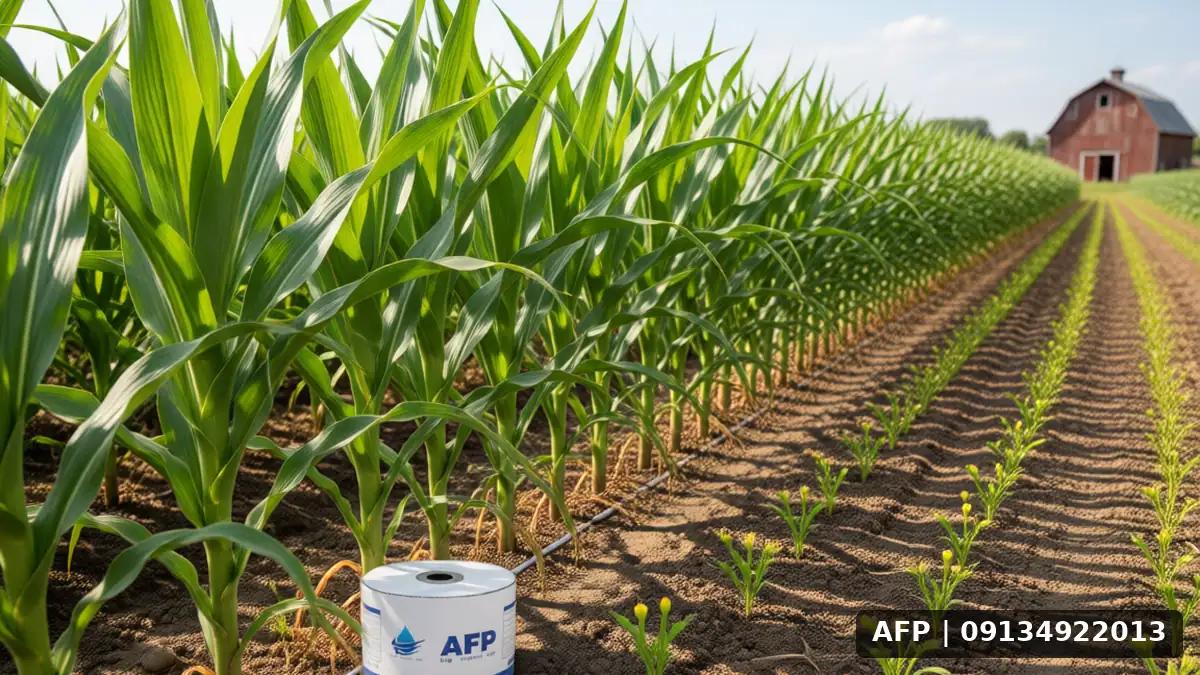
- Irrigation equipment costs (drip tape and filtration): This section includes the purchase of drip tape (approximately 4 to 5 kilometers are required for one hectare), main hose, pump, filter, and pressure regulator. The selection of drip tape type on Types of irrigation drip tapes and their performance is highly sensitive. Higher-quality drip tapes may have a higher initial cost, but they have a longer useful life and reduce long-term repair and replacement costs.
- Seed and initial input costs: The price of improved corn seed varies, but a critical point is the planting density. Using optimal planting density can prevent seed waste. For more information on the relationship between density and yield, you can refer to the article Start with seed per hectare and factors increasing yield Read the study. Although this article is about coriander, its technical principles are generalizable to other crops, including corn.
- Land preparation cost: Drip tape requires proper land leveling. The cost of ripping, plowing, and rolling, depending on whether machinery is rented or owned by the farmer, can constitute a significant portion of the initial budget. The use of standard furrows and the creation of channels for drip tape passage are other factors that affect costs.
- Fertilization and pest control cost: The drip tape system enables precise fertilization, which increases fertilizer efficiency. However, purchasing fertilizers and pesticides remains an expense that should be planned based on soil analysis.
Economic analysis and water conservation
One of the most important benefits of using the drip tape system in corn cultivation is the significant reduction in water consumption. Drip irrigation keeps only the root zone moist and reduces evaporation and losses through deep percolation. This savings directly affects the farm’s operating costs. If you are using water sources with a specific cost per cubic meter, a 30 to 40 percent saving in water consumption can significantly reduce irrigation costs.
In addition to water, labor costs are a key factor. Drip tape systems are simpler to set up and manage compared to conventional irrigation. With automation equipment installed, the need for manual rotation and continuous monitoring is reduced. You can read the article here How can the useful life of drip tapes be extended? Learn strategies for maintaining system performance over time and reducing costs associated with frequent drip tape replacement.
Practical tips for reducing corn cultivation costs with drip tape
Given the cost sensitivity of corn production with drip tape systems, adhering to the following points can help optimize the budget:
- Selecting the appropriate drip tape spacing: The spacing between lines should be adjusted based on the root zone diameter and corn varieties. Using wider-diameter tapes with closer spacing increases equipment costs. To understand the determining factors for spacing, you can read the article The importance of spacing between drip tape and poly pipes and its impact on performance Review this.
- Use of Single-sided Drip Tape: Under certain conditions, using single-sided instead of double-sided tapes can reduce consumption costs, especially in medium-density raised-bed farms.
- Intensive Water Resource Management: Monitoring system pressure and preventing nozzle clogging reduces water consumption. Proper filtration is an investment whose return in damage prevention is undeniable.
- Input Consumption Optimization: Using improved, drought-resistant seeds can reduce investment risk. Selecting varieties compatible with drip systems is the key to success.
Frequently Asked Questions (FAQ)
What is the cost of drip tape for one hectare of corn?
The price of drip tape varies based on thickness, length, film gauge, and lobe width (hole depth). Generally, for one hectare with a standard spacing of 65 to 70 centimeters, approximately 4 to 5 kilometers of drip tape are required. Prices vary across different ranges depending on the brand and product quality. It is recommended to request a quote from the supplier and compare rates before purchasing.
Is the use of drip tape for corn economically viable?
The economic viability of the drip tape system can be calculated based on the return on investment (ROI). By reducing water consumption, increasing crop yield, and lowering labor costs, the initial investment is justified in the long term. In particular, for large farms, the return on investment is faster.
What type of drip tape is suitable for corn?
Drip tape with a hole depth of 15 to 20 centimeters and an emitter spacing of 20 to 30 centimeters is suitable for corn. The tape thickness must be resistant to pressure and wear.
Summary
Calculation Cost of corn cultivation using drip irrigation per hectare It is a dynamic process dependent on several variable factors. The key to economic success is utilizing the drip system as a competitive advantage rather than merely an operational cost. By selecting appropriate equipment, optimizing water resource management, and adhering to technical cultivation principles, farm economic efficiency can be enhanced. Sustainable and technology-driven agriculture is the future of both exportable and domestic product markets.
For more information about other products and how to increase their yields with modern systems, you can refer to other articles on the site, such as Increasing Parsley Yield per Hectare: Practical Solutions or Green Bean Seed Rate per Hectare: Planting Guide.