Drip Tape Maintenance for Onion Cultivation: Key Points
Introduction: Why is drip tape critical for chives?
Chives (Allium schoenoprasum) are a sensitive herb whose root development directly impacts final yield weight and quality. In modern cultivation methods, the use of drip tape or Drip Tape as the superior irrigation system has become standard due to the precise delivery of water and nutrients to the root zone. However, an advanced irrigation system without proper maintenance can quickly become a major problem. Clogged emitters, tube cracking from UV exposure, and pressure leaks are among the primary challenges farmers face when growing chives. This section aims to familiarize you with the fundamental principles that ensure your irrigation system remains healthy and efficient throughout the entire growing season.
Below, we will explain the technical and operational details related to mesh-covered drip tape irrigation so that you can achieve the best results from this system in your fields.
Technical Principles of Drip Tape Maintenance in Chives Cultivation
1. Selecting drip tape appropriate for green onion root depth
Green onion roots typically perform their main activity at a soil depth of 10 to 20 cm. Therefore, when purchasing drip tape, the perforations must be designed to concentrate water flow precisely in this zone. Drip tapes with intermittent spacing are generally preferred for drainage-needling vegetables like green onion because they prevent leaching of chemicals in the root zone. If your drip tape has openings smaller than 2 mm, the likelihood of clogging increases without proper filtration.
2. Managing pressure and flow rate
One of the common mistakes in maintaining irrigation systems is using pressure that exceeds the allowed limit. Drip tapes are typically designed to operate at specific flow rates under low pressures. High pressure can cause the tape to stretch, deform the openings, and create minor leaks. For green onion, it is recommended to keep the operating pressure within the range of 1 to 3 bar. When using high-capacity pumps, always use a pressure regulator (Prav) before water enters the drip tape to prevent the blowing phenomenon (upstream surges).
3. The role of foamers in preserving drip tape health
One preventive measure to avoid biological clogging of openings is injecting a small amount of hydrochloric acid or industrial foamer before starting each irrigation cycle. In green onion farms with high relative humidity, algae growth and microbial contamination in the irrigation system occur more rapidly. Periodic foaming (every 2 to 3 weeks) allows water to flow easily through sandy or plastic openings and reduces sedimentation.
Seasonal maintenance operational planning
Drip tape maintenance is not a one-time task but a continuous process. To optimize onion crop irrigation, follow a seasonal checklist:
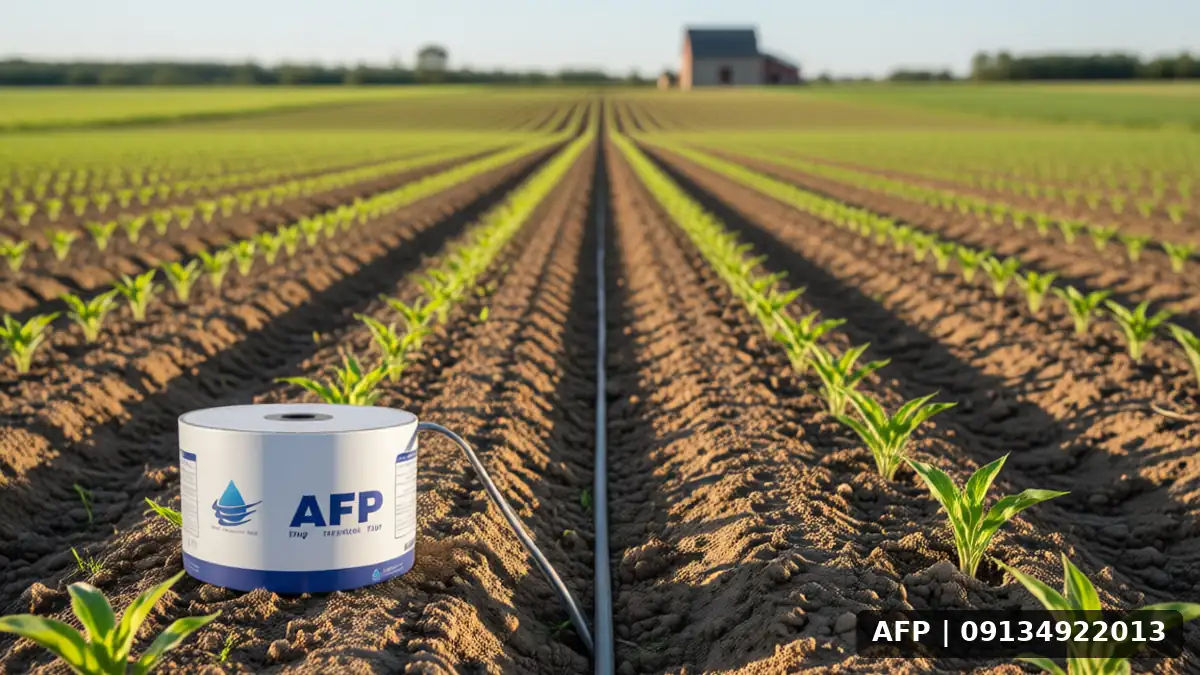
- Initial visual inspection: Before the season begins, do not cut last year’s drip tapes (if possible) and store them folded. At the start of the season, inspect the entire length of the tape to identify any torn or damaged points.
- Flow meter calibration: The accuracy of drip tape performance depends heavily on the correct calibration of the flow measurement device. Using a clear cup, check the flow rate of each tape to ensure water is discharged uniformly and no clogging has occurred.
- Use of cattle manure: Onions are highly sensitive to high leaf moisture, which causes grey rot. By adjusting the cattle manure on the drip tape, you can ensure water droplets exit at the appropriate pressure and prevent splashing of water onto the leaves.
Prevention of emitter clogging and filtration
The most important part of Drip tape maintenance for green onions is related to the filtration section. Water used for green onion irrigation must always pass through a dual filtration system (disc and sand). If your water source is a well or canal, suspended sediment, turbidity, and fine particles are the main enemies of drip tape emitters. During the season, clean sand filters weekly. Use mesh filters (plastic screen filters) with finer mesh to allow fine particles to settle before entering the drip tape. Remember that every fine particle that escapes the filter can accumulate in the drip tape and cause a 20 to 30 percent reduction in discharge flow rate.
Impact of UV light on drip tape lifespan
The plastic used in drip tape (usually PE or LDPE) is sensitive to ultraviolet radiation. When drip tape is laid on the ground, sections covered by soil are protected, but moving the tape or leaving it exposed to direct sunlight without cover rapidly reduces its useful life. For green onion cultivation, which may involve multiple planting cycles, it is recommended to remove the drip tape from the soil after harvest, clean it, and store it in its original packaging or vertically away from direct sunlight. This practice can increase the useful life of drip tape from one season to 2 or even 3 seasons.
Frequently Asked Questions (FAQ)
- Should the drip tape for onion seedlings be laid flat on the ground or buried under the soil?
For onion seedlings, placing the drip tape on the soil surface (level) at a distance of 10 to 15 cm from the planting rows is recommended. This ensures that moisture is delivered superficially to the upper roots and proper drainage is maintained. Burying it under the soil increases the risk of physical root constriction by the tape. - When should flushing be used?
If you observe a decrease in the output flow rate of the drip tape or notice that some holes are not discharging water, it is time to flush. Never allow the water flow to stop completely; flushing must be performed while a weak flow is present to allow the flush agent to clear clogged holes. - What is the difference between perforated drip tape and a drip emitter in onion seedling cultivation?
Perforated drip tape (Perforated) is more suitable because it is more cost-effective and easier to install. For high-density vegetable crops like onion seedlings, uniform flow distribution via perforated tape is sufficient, and precise emitters are not required unless the soil is very heavy or drainage is extremely slow.
Summary and Final Recommendation
proper management yields of crops such as onions and vegetables is directly related to rooting quality. Maintaining onion drip tape is a process that requires daily attention. By ensuring proper filtration, correct pressure regulation, and periodic flushing, you can benefit from the full capacity of this irrigation system. Remember that any damage to the drip tape increases the cost of chemical and water inputs and can harm final yield. Also, to learn more about optimizing the performance of other vegetables, read the guide on asparagus yield per hectare which can give you a better perspective on the common principles of irrigating drainage vegetables. Ultimately, combining technical knowledge with regular review is the key to success in modern precision agriculture.
Related articles: Mung bean seed rate per hectare + factors influencing the determination of the rate