Letuce Yield per Hectare with Drip Tape: A Comprehensive Guide to Boosting Performance
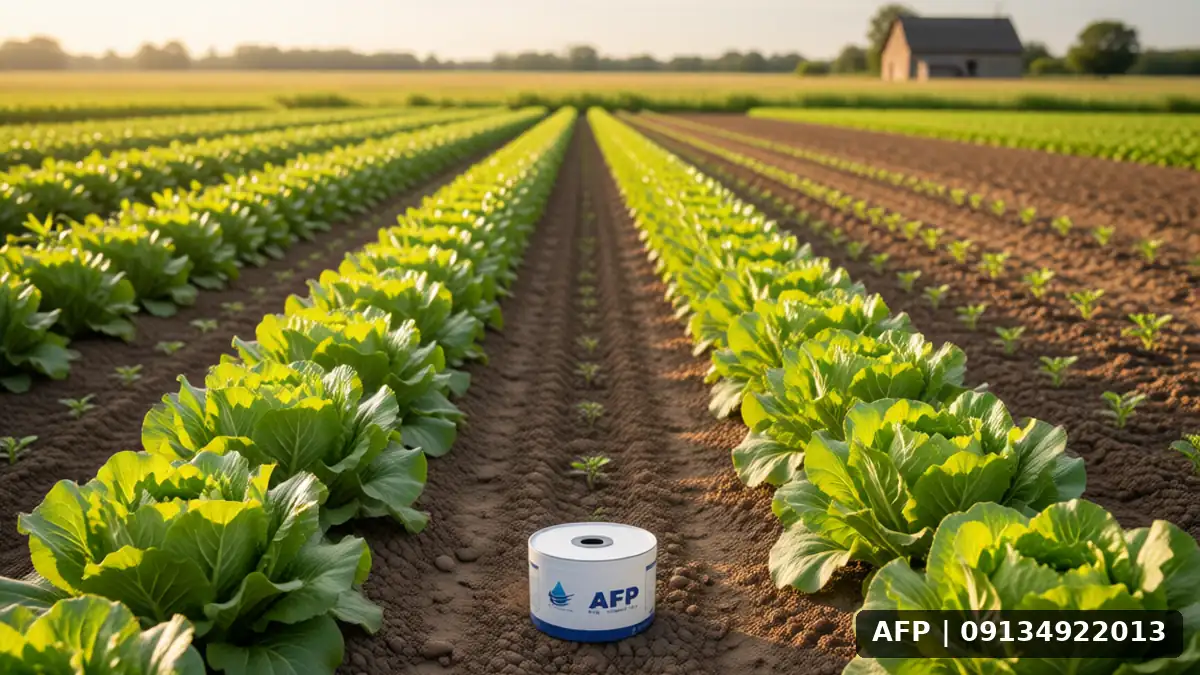
Lettuce is one of the vegetables most sensitive to precise water and soil resource management. This plant, which primarily belongs to the Asteraceae family, has relatively rapid growth but its leaf texture is highly affected by water stress. Selecting the appropriate irrigation system can make a significant and sometimes decisive difference in final quality and yield. In the world of modern agriculture, Letttuce yield per hectare is no longer dependent solely on natural factors, but is heavily reliant on technologies such as drip tape irrigation systems. By delivering water precisely and directly to the root zone, these systems not only reduce waste but also enable better plant nutrient management. This comprehensive article examines the detailed technical and practical aspects of this system and its direct impact on farmers’ profitability and productivity. Our goal is to help you maximize your farm performance through a deeper understanding of the drip tape mechanism.
Introduction to Drip Tape Systems in Lettuce Cultivation
Drip tape is essentially a plastic irrigation conduit featuring thin, uniform slots for controlled water seepage. Unlike fixed emitters installed on or under the soil surface, drip tape is laid continuously along the crop rows, delivering water directly to the plant root zone. Its primary key advantage is the significant reduction of labor costs, the elimination of the need for heavy piping, and increased speed in planting and harvesting. When discussing achieving Letttuce yield per hectare at maximum levels, absolute control over soil moisture is the most critical factor. Lettuce has a very tender texture, and even short-term water deficiency causes leaf fragility, drying of the head core, and a severe reduction in individual leaf weight, which directly affects the final product volume.
Factors Influencing Lettuce Yield per Hectare
To accurately determine final performance and logically predict tonnage, special attention must be paid to several parameters under close scrutiny:
- Planting Spacing and Aisles: Appropriate geometric layout minimizes harmful shading between plants and ensures optimal airflow across the field surface, preventing fungal diseases.
- Seed Type: Although different lettuce varieties exhibit distinct visual and quality differences, cultivars resistant to environmental stresses demonstrate higher productivity in semi-arid conditions and areas with intense solar radiation.
- Vegetative Cycle Duration: Shortening the vegetative period through intelligent temperature and water management increases the number of annual cropping cycles, thereby doubling total annual income.
In advanced drip tape systems, uniform water distribution ensures better absorption of all chemical inputs and fertilizers. This directly leads to faster plant growth and ultimately impacts Letttuce yield per hectare Many experienced farmers, through studying Key points of drip tape irrigation It is recognized that maintaining correct and constant pressure in the tape is the key to system stability and preventing uneven performance across the farm.
Optimizing drip tape for maximum yield
Determining the appropriate spacing between tapes
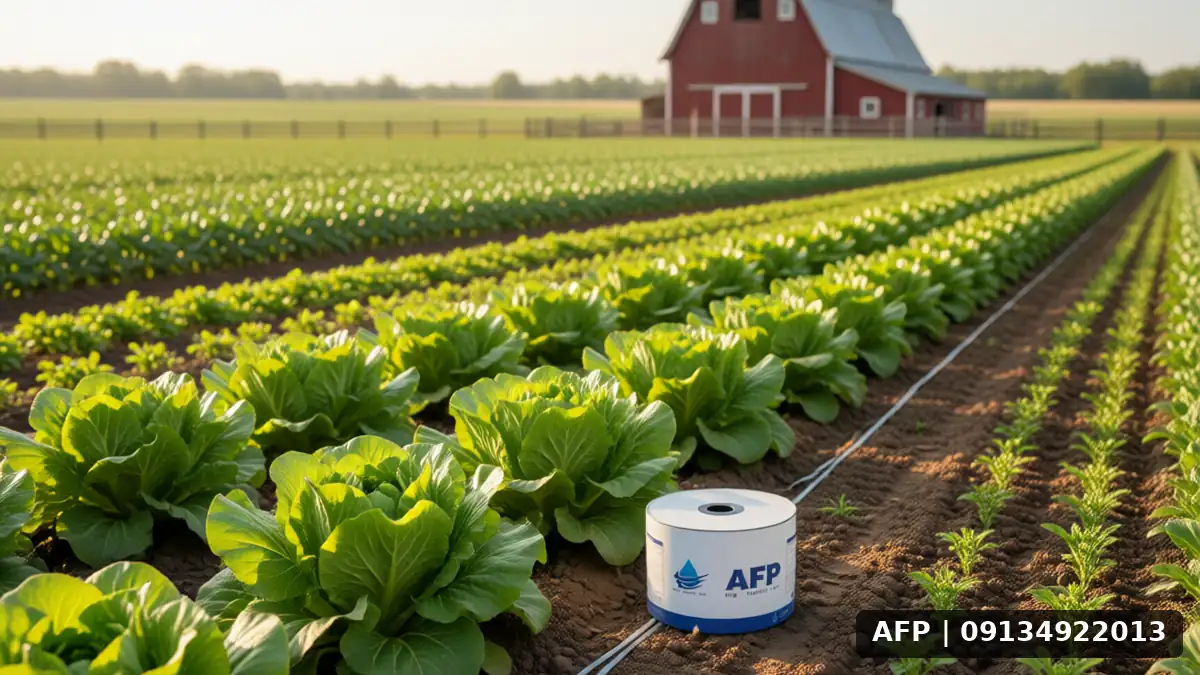
The spacing between drip tapes must be adjusted precisely based on the width of each lettuce row. In strip systems, the tape is usually placed in the center of the space between two rows or under the inner edges of the rows. If this spacing is too wide, water will not supply the upper part of the row, causing plant lodging and head asymmetry. It is strongly recommended to install tapes so that the root zone is fully covered. This approach is similar to principles that in Drip tape spacing for sweet corn is followed, although plant dimensions and water requirements vary.
Pressure and flow management
Using thin tapes without control can lead to increased flow velocity and, consequently, unwanted pressure fluctuations. To maintain lettuce yield per hectare, tapes with appropriate flow rates and standard thickness suitable for the regional climate should be used. Pressure fluctuations at the start of the tape cause some areas to remain dry and others wet, resulting in uneven head sizing and reduced final pricing.
Additionally, the smart combination of drip tape irrigation with fertilizer injection (Fertigation) has a remarkable effect. In increasing spinach yield per hectare , the same positive phenomenon is observed; lettuce, like spinach, is sensitive to nitrogen and potassium and experiences a 20 to 30 percent yield improvement with precise dilution of fertilizer in water.
Yield comparison with other irrigation methods
Is drip tape necessarily better than drip lines? In short-duration crops and garden plots requiring rapid ground turnover, drip tape is more economical due to faster planting and harvesting. However, if you plan multi-year farming, drip lines are more stable. For annual vegetables such as lettuce, lettuce yield per hectare With drip tape, the irrigation threshold is typically 15 to 20 tons per cropping cycle. This amount may vary depending on climate, temperature, and cultivar.
In areas where water management is difficult, study Mashri yield per hectare and methods to increase performance It can provide a common insight into managing root and seed vegetables, as the principles of moisture retention are the same in both.
Practical tips for orchardists
- Appropriate filtration: Never operate the drip line without a 100-120 mesh metal filter. Clogging of emitters causes dryness in parts of the field and fails to equalize yield.
- Planting depth: Lettuce seeds should be planted at a depth of 1 to 1/5 centimeters so that the moisture from the drip line can directly contact the roots.
- Soil covering: Using green covers or mulching alongside the drip line reduces evaporation and keeps roots cool.
Also, if you are seeking crop diversity, understanding the principles of the irrigation system helps. Potato tonnage per hectare also depends on these same principles; that is, the balanced management of water and nutrients.
Frequently Asked Questions (FAQ)
What is the lettuce yield per hectare under ideal conditions?
Under suitable climatic conditions and using drip irrigation, the average yield can vary between 15 to 25 tons per planting cycle. This figure includes large and uniform heads.
What should the drip line spacing be for lettuce?
It is recommended to place the drip line at a distance of 10 to 15 centimeters from the seed planting location. If planting in a furrow, place the line inside the furrow next to the roots.
Is drip irrigation suitable for autumn planting?
Yes, but in autumn plantings with seasonal rainfall, the need to install drip lines may be less. In this case, drip systems or sprinkler irrigation are sometimes preferred.
What is the difference between tape and strip irrigation?
The main difference lies in wall thickness and the type of slits. Tape is designed for single-season (annual) plantings, while more durable strips like drip lines have a longer lifespan.
Summary
Achieving maximum lettuce yield per hectare with tape irrigation requires a precise understanding of plant behavior and the system. By maintaining appropriate spacing, controlled pressure, and using a good filter, you can reduce production costs and increase efficiency. It is always recommended to consult technical experts before the season begins to align with climatic changes. To better understand the effects of different systems, studying related articles such as Increasing onion yield per hectare can also provide you with a broader perspective on vegetable garden management.