Golaran Seed Rate Per Hectare: Comprehensive Guide
Introduction: The Importance of Precise Planting Density for Canola
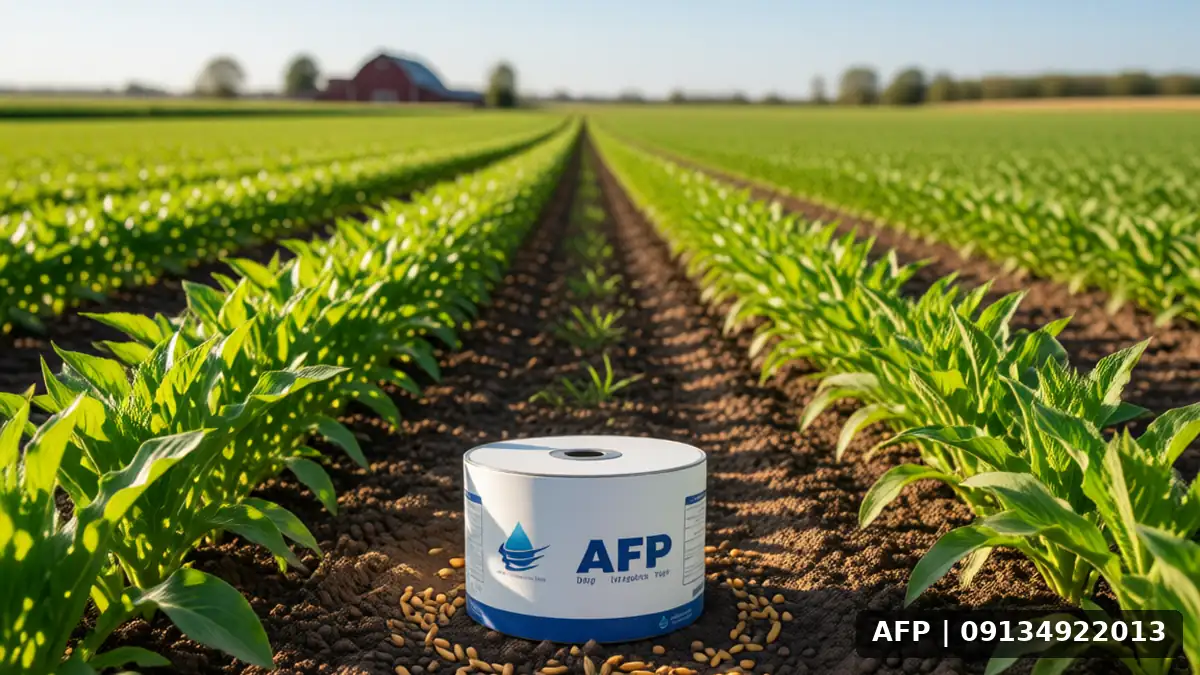
Canola is one of the primary oilseed crops grown in both autumn and spring planting seasons across various climates in Iran. One of the most frequently asked questions among growers regarding this crop is the seed rate of canola per hectare . Accurate determination of this figure directly impacts soil cover, competition with weeds, water consumption, and ultimately the final yield. In modern cropping systems that utilize drip irrigation and band irrigation, the coordination between plant density and irrigation intensity is even more critical than in traditional farming. If the density is excessive, plants will compete for water and nutrients, resulting in poor root development; conversely, if the density is too low, the oil production capacity of each plant will not be fully utilized, allowing weeds to establish themselves.
The objective of this guide is to provide a practical, data-driven perspective, enabling farmers to select the optimal seed rate within the range of 25 to 45 kilograms per hectare based on their specific farm conditions.
Factors Determining the Seed Rate of Canola per Hectare
There is no single, absolute figure applicable to all farms. The seed rate of canola per hectare is subject to the following variables:
- Crop varieties: Flower-type sorghum varieties with a seed-based planting rate (e.g., 20–25 thousand seeds per hectare) differ fundamentally from giant varieties (5–8 thousand seeds per hectare). Modern varieties are usually semi-giant and require medium planting density.
- Soil moisture and irrigation status: In drip irrigation areas with faster root establishment, slightly higher planting densities can be used. Conversely, in dryland farming or with unreliable drip systems, lower densities carry less risk.
- Most important factor: Seed viability. Fresh seeds with viability above 95% require a lower seed rate than older seeds with 80% viability on a per-unit area basis.
To better understand planting density calculation and its impact on resource management, reviewing the corn grain yield per hectare section provides similar insight into plant density and input ratios, as the plant physiology logic is similar for grain crops.
Planting density comparison table by conditions
The following table is an index of the recommended ranges for the sunflower seed rate per hectare based on variety and planting method:
Note that seed estimates are based on a thousand-grain weight of 400 to 550 grams. If lighter varieties are used, the seed quantity in kilograms for the same number of stands will decrease.
Synergy of Seed Rate and Drip Line Irrigation
The drip line irrigation system, due to its more precise water distribution in the root zone and reduction of soil surface evaporation, allows the farmer to utilize the potential of high-yielding wheat varieties. In regions where water scarcity makes wheat cultivation risky, this system is critical. Managing drip lines means adjusting the precise planting density to match the spacing of the lines to prevent the middle drip line between two emitters from drying out.
Specifically, if the wheat seed rate per hectare is increased, the root mat density rises, and the water requirement during the first growth stages increases. In such conditions, using emitters with closer spacing (e.g., 20 cm spacing instead of 40 cm) can sufficiently meet the demand in high-density sections. To familiarize yourself with the principles of proper installation and maintenance of this system, the article ‘Local Climate Drip Line Map’ is a good guide for adapting equipment to your farm’s conditions.
Effect of planting in 20 cm and 40 cm lines
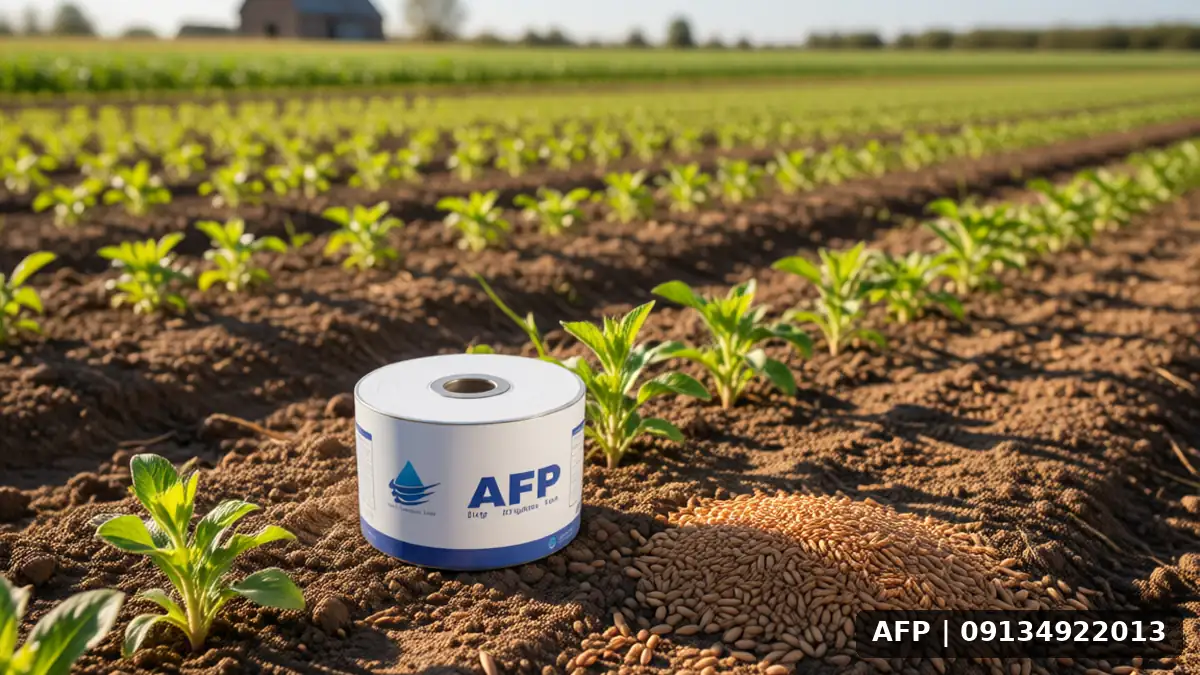
Planting spacing also affects seed requirements. In single-line planting, seed density per square meter directly depends on the row spacing. If the spacing between rows is 20 cm, seed density increases, and the wheat seed rate per hectare should be reduced as much as possible to prevent intense competition between seeds that leads to smaller grain size. In contrast, twin planting or 40 cm row spacing creates more space for seed development and allows for a slightly higher density (assuming appropriate seed vigor) to be set.
Practical tips for wheat seed planting
- Uniform seed spreading: Use a hand seed drill with precise calibration. Losing one-third of the seed at an inappropriate depth reduces apparent stand vigor, making it seem like the seed rate is insufficient. A seeding depth of 3 to 5 cm is ideal.
- Using coated seed: In some varieties, coated seed has a higher bulk volume. If using this type, increase the kilogram rate by 15%.
- Initial seed irrigation: Immediately after sowing and before final seed distribution, apply a light strip of water to bring the seed into contact with soil moisture.
- Synchronization with irrigation: With reduced drip irrigation intensity at the start of the growth period (for weed control), if using a lower seed rate of less than 25–30 kg/ha, pre-emergence herbicides must be used.
Frequently Asked Questions (FAQ)
1. Does reducing or increasing the sunflower seed rate per hectare affect oil quality?
Under standard conditions, it does not directly affect oil percentage, but it impacts the total oil yield per hectare (final quantity). High density generally results in smaller, weaker seeds, which reduces oil extraction efficiency at processing facilities.
2. In mountainous regions with high altitudes, should I adjust the seed rate?
Yes. Due to lower temperatures and slower growth, shorter and earlier-maturing varieties are required, which typically need higher density to establish soil coverage.
3. The drip system is old; what seed rate should I use?
In older systems where water distribution is uneven, use the minimum seed rate (approximately 25-30 kg for giant varieties). Seedlings in dry strips will remain weak at high densities.
Summary
Selection Perennial ryegrass seed rate per hectare It is a multi-dimensional decision that includes variety combinations, irrigation status, and farm conditions. Generally, the safe range for most varieties in Iran is 25 to 45 kilograms. If you use modern drip and tape systems, you can move toward semi-dwarf varieties with higher density to increase oil production capacity. Always use vigorous seed with high viability so that the number of established plants matches the number of seeds sown. To learn about factors affecting yield in other crops with varying densities, you can read the article on key points when using irrigation tape and the article Strawberry yield per hectare: factors and methods for increasing it to study.
Related articles: Related article Related article Related article Related article DB8CDAA9 Related article Related article Related article, Cantaloupe seed rate per hectare + planting density table, pakhtahosil yeki gektar rahnama kishovarzon