Tip Line Spacing in Ridge Cultivation: Recommended Standards
Introduction: The Importance of Proper Irrigation Line Layout in Coriander Cultivation
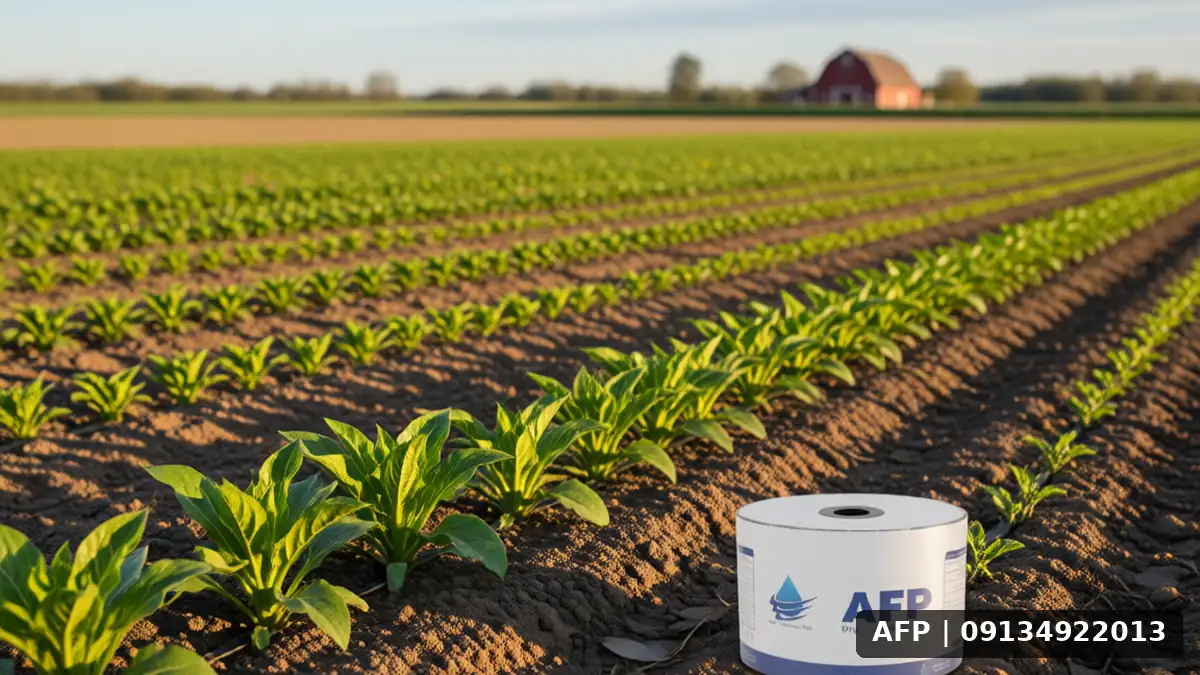
Coriander cultivation (native herb crop) is one of the most challenging plants for drip irrigation systems due to high sensitivity to water stress and the need for uniform moisture around the root system. Many farmers believe that simply installing drip emitters is sufficient, but the reality is that the physical distance of the wetted strip from the center of the row and also the distance between parallel wetted stripsultimately determines product quality. If the distance of the wetted strip from the row axis is inappropriate, the crop will either experience dryness in the un-irrigated zone or suffer from waterlogging due to moisture accumulation.
Effect of spacing on the active root zone
The drip tape system operates by creating a narrow wetting fringe. In row cropping, where roots are most active at a depth of 20 to 30 cm, the primary goal is to position this wetting fringe directly under or slightly ahead of the plant collar to facilitate the uptake of highly mobile nutrients such as potassium and nitrogen. Excessive spacing forces the plant to expend significant energy to access water and can cause stress under hot conditions.
Recommended drip tape spacing standards
Determining the precise drip tape spacing depends on two main variables: the crop variety and the row layout. The following section reviews the technical and operational standards based on agronomic research.
Drip tape lateral spacing from the row centerline
For most commercial crop varieties with stalk heights under 1.5 meters, it is recommended that the distance of the drip tape from the center of the row (where the seed was planted) be between 10 to 15 cm This spacing ensures that the wetting fringe overlaps with the outer edge of the plant root zone. If pipeline placement is limited by mechanized equipment, a minimum spacing of 10 cm must be maintained to ensure the initial root system is unobstructed. However, for taller varieties with broader leaf coverage, a spacing of 15 to 20 cm may be more appropriate, provided that the drip irrigation flow rate is reduced to allow moisture to penetrate deeper.
Spacing between parallel tapes in double-sided rows
Many crop farms use double-sided row layouts to increase density. In this configuration, two drip tapes are installed parallel to each other at a specific distance. The distance between these two tapes must not be less than 40 centimeters to prevent overlapping of wetted zones and a sharp increase in relative humidity at the center of the row. Overlapping wet zones creates an ideal environment for the growth of soil-borne fungi and rust diseases. Therefore, maintaining air circulation space between tapes is a gold standard in vegetable irrigation engineering.
Technical analysis: Relationship between spacing, effective ET, and roots
Understanding this section is essential for professional engineers and farmers. There is a direct relationship between Evapotranspiration evapotranspiration (ET) and the wetted pattern size. The distance of the drip tape from the roots changes the water infiltration depth. If the distance is short (for example, 5 centimeters), water evaporates quickly in the surface zone and infiltration depth decreases. However, if the distance is balanced (15 centimeters), water moves slowly into the depth. For more accurate calculations, you can refer to our guide on Discharge rate of the drip tape Refer to the specifications to calculate the suitable discharge rate for each dripper based on pipe thickness and pressure.
Impact on nutrient uptake
Dates are a crop with high demand for micronutrients. Drip tape creates a narrow wetting band, increasing fertilizer deposition density in a specific zone. If the band-to-root distance is too large, the farmer must increase fertilizer dosage, leading to soil salinization at the row center. Therefore, the standard 10–15 cm distance balances salinity risk and water deficiency.
Practical points for implementation in real farms
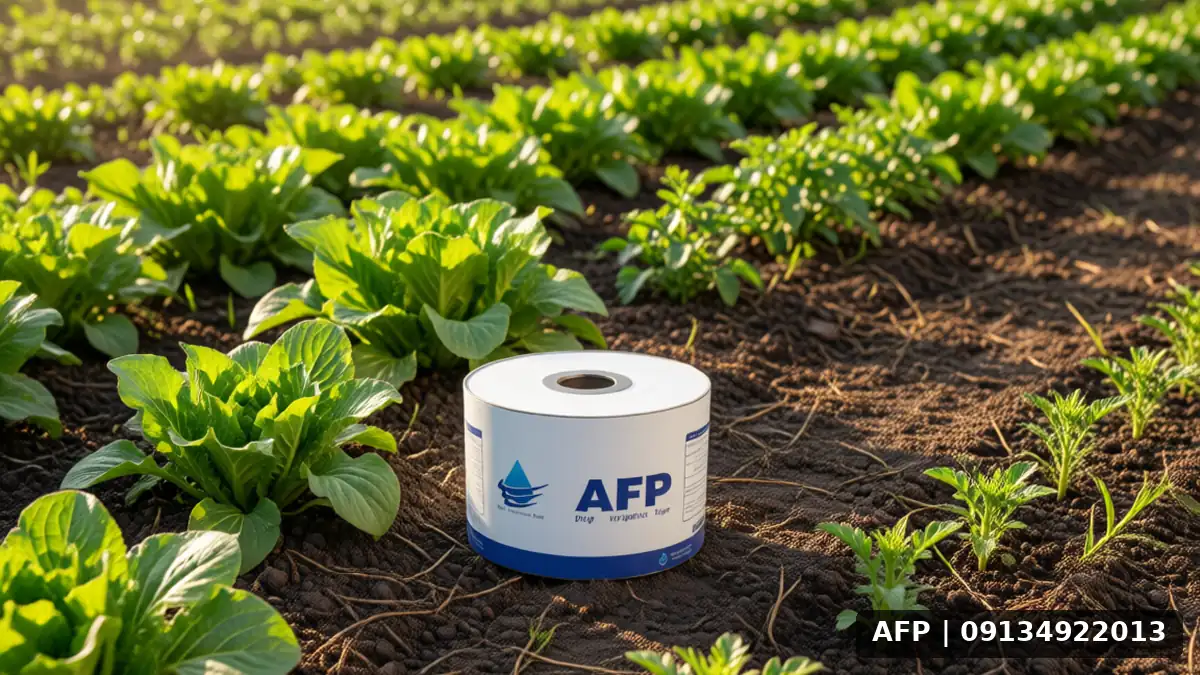
Theory without practical application is useless. When installing the irrigation system for dates, adhere to these practical points to ensure uniform performance Micro drip tape It is critical to:
- Alignment with prevailing wind direction: In windy areas, install the drip line so that the wind blows from the irrigation line toward the row center to prevent rapid drying on the windward side. If the line is too far from the central axis, the wind-driven evaporation effect will increase.
- Pressure and flow rate control: Ensure that the drip rate of your emitters matches the physical spacing selected. If the spacing is narrow, a high flow rate can cause dripping and the spread of fungal diseases. Use the manufacturer’s technical tables.
- Row spacing: The spacing of the drip line should always be adjusted based on the width of the furrow or planting distance. If your row spacing is 50 cm, a 15 cm offset from the center is incorrect, as lines on adjacent rows will overlap. In this case, reduce the offset to 10 cm.
Common troubleshooting after planting
- Core root dryness: If you notice the central leaves of the plant turning yellow, the drip line is likely placed too far from the main root. Solution: Add a second drip line at a safer distance, or reduce flow rate and increase irrigation frequency.
- Base rot: This indicates the drip line is too close to the stem. Water is hitting the plant base directly. Position the lines 5 to 10 centimeters away from the center.
Frequently Asked Questions (FAQ) About Drip Line Spacing
1. Is drip line spacing the same for all strawberry varieties?
No. Varieties with shallower root systems require shorter spacing (10–12 centimeters) for faster water absorption. Varieties with deeper root systems can use 15–20 centimeters. Always verify with root sampling in your local field.
2. How do I determine the optimal spacing for my specific field?
Perform a simple test: after irrigation, measure the width of the wet zone in the soil at a depth of 15 cm. Divide this width by the row center. Typically, the wet strip extends vertically to twice its horizontal distance from the root.
3. Can I place the drip tape directly on the planting line?
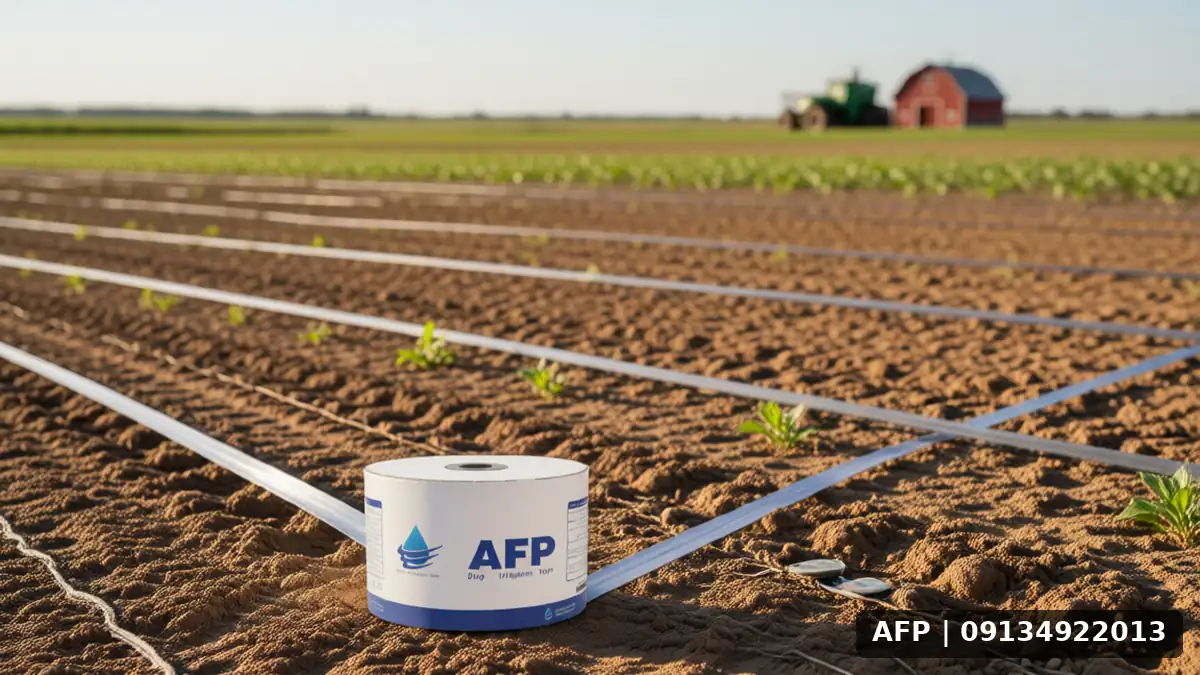
This is strongly not recommended. Placing the tape on the planting line can burn delicate germinating shoots on sunny days due to the accumulation of light and water on the transparent or semi-transparent tube. Always maintain a minimum distance of 10 cm.
Conclusion: Achieving Maximum Efficiency
Selection Drip tape spacing in marzab crop is an agri-engineering decision that directly affects the water use efficiency coefficient and yield volume. Adhering to the 10 to 15 cm standard for most conditions, along with consideration of wind direction and planting density, yields the best results. Remember that drip irrigation is a dynamic system; with seasonal and climatic changes, it may be necessary to review these distances at the threshold of a new season. For a better understanding of the internal components and how these systems are connected, read our guide on Drip line components It can complement your technical perspective. By applying proper layout principles, you will not only reduce water costs but also achieve uniform crops that are resistant to waterlogging diseases.
Related articles: Rapeseed seeding rate per hectare: Comprehensive guide + influencing factors