Tiep Strip Spacing for Lentil Cultivation: Recommended Standards
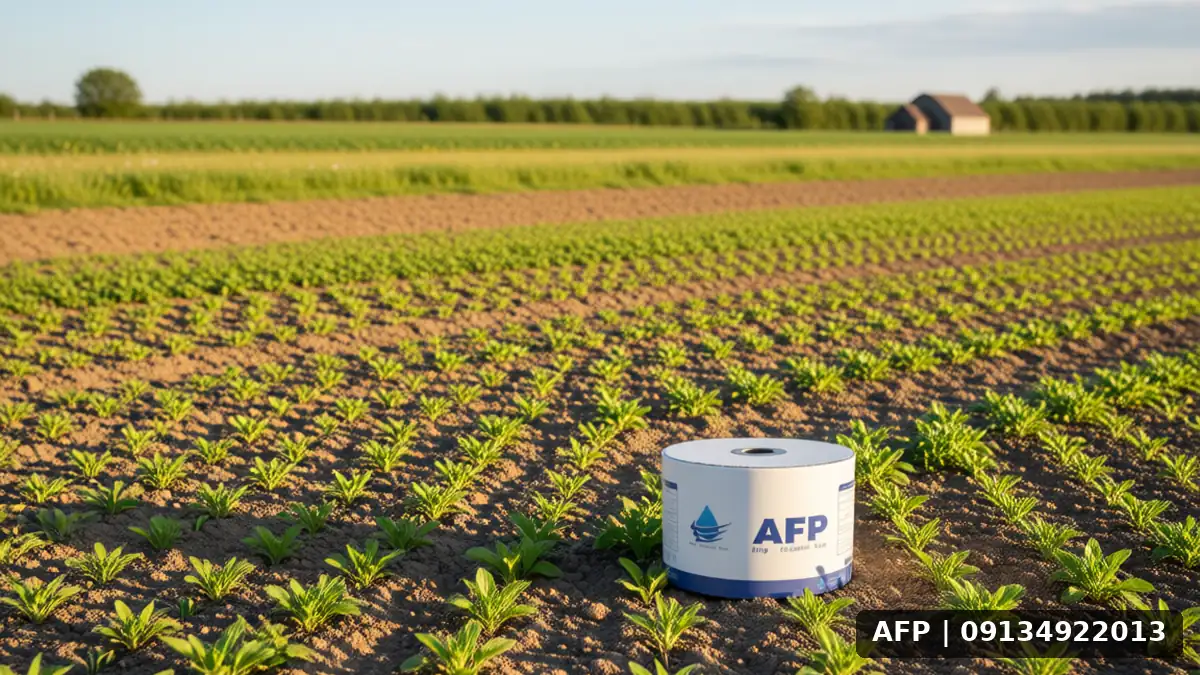
Introduction: Why drip line spacing is critical in lentil cultivation?
As one of the most important legumes for nutrition and soil structure preservation, lentils require a precise and sustainable irrigation system. In drip irrigation, the correct placement of the line beneath the planting row directly affects rooting establishment and uniform moisture distribution in the root zone. Many farmers become confused when selecting drip line spacing in lentil cultivation ; should the line be placed directly under the root or at a safe distance? The answer to this question depends on factors such as soil type, regional climate, and the type of planter used.
Recommended standards for row layout in lentil cultivation focus on reducing water stress during sensitive flowering and podding stages, while preventing unnecessary water application to non-rooted areas. Below, we explore the optimization of these spacings with technical and practical details.
Technical principles of lentil row layout and drip line positioning
To determine drip line spacing in lentil cultivationUnderstanding the relationship between crop row spacing and the radius of soil water wetting is essential. Chickpea is typically planted in two main systems: double-row or single-row. The standard inter-row distance varies from 50 to 65 cm depending on the climate, while seed depth is approximately 3 to 5 cm below the soil surface.
1. Single-Row System
- Inter-row distance: Usually between 40 and 50 cm.
- Drip line position: In this system, the drip line should be placed directly under the planting line at a depth of 2 to 3 cm below the soil surface.
- Lateral distance: The distance from the drip line to the center of the crop row must be less than 10 cm to ensure moisture is delivered directly to the topsoil root zone.
2. Double Row System
In the double-row method, more common in drier regions, two rows of lentil are planted close together (approximately 20 to 25 cm apart), with a spacing of 60 to 70 cm between double-row blocks.
- Drip tape position: The drip tape is placed in the center of each double-row block (i.e., in the middle of the 60-70 cm spacing).
- Distance from roots: In this configuration, the distance from the drip tape to the nearest plant root is approximately 10 to 15 cm. This safety distance prevents direct application of hot water onto seeds or root crowns and ensures more uniform moisture distribution across the two adjacent rows.
- Machine wheel traffic: This arrangement allows machinery to pass through the center of narrow blocks without crushing the main roots of the lentil plants.
It should be noted that in the drip line spacing in lentil cultivation In a two-row system, asymmetry in the layout can lead to the inner section of the two rows remaining dry and insufficient water in the outer section. Therefore, precise alignment of the drip line to the geometric center of the block is the key to success.
Impact of soil properties on spacing selection
Well-aerated, low-bulk-density soil (such as sandy) increases the rate of water infiltration and limits the wetted bulb. In contrast, loose loams distribute moisture more uniformly and to greater depths through capillary movement.
When using drip tape pipes with a diameter of 16 or 12 millimeters and emitter spacing of 12 or 15 centimeters, the irrigation circles of adjacent rows can be intermingled as much as possible to prevent the central soil band between rows from drying out. This is a key principle in optimizing Drip tape spacing in lentil cultivation st.
Practical points for correct implementation of chickpea drip irrigation
1. Setting drip tape depth relative to the compacted layer
After the planter passes, a compacted soil layer remains at a depth of 3 to 5 cm. The drip tape should be placed within this compacted layer, exactly beneath it. If the tape is placed deeper than the seed planting depth, the primary roots cannot quickly access the water, and the plant becomes stressed.
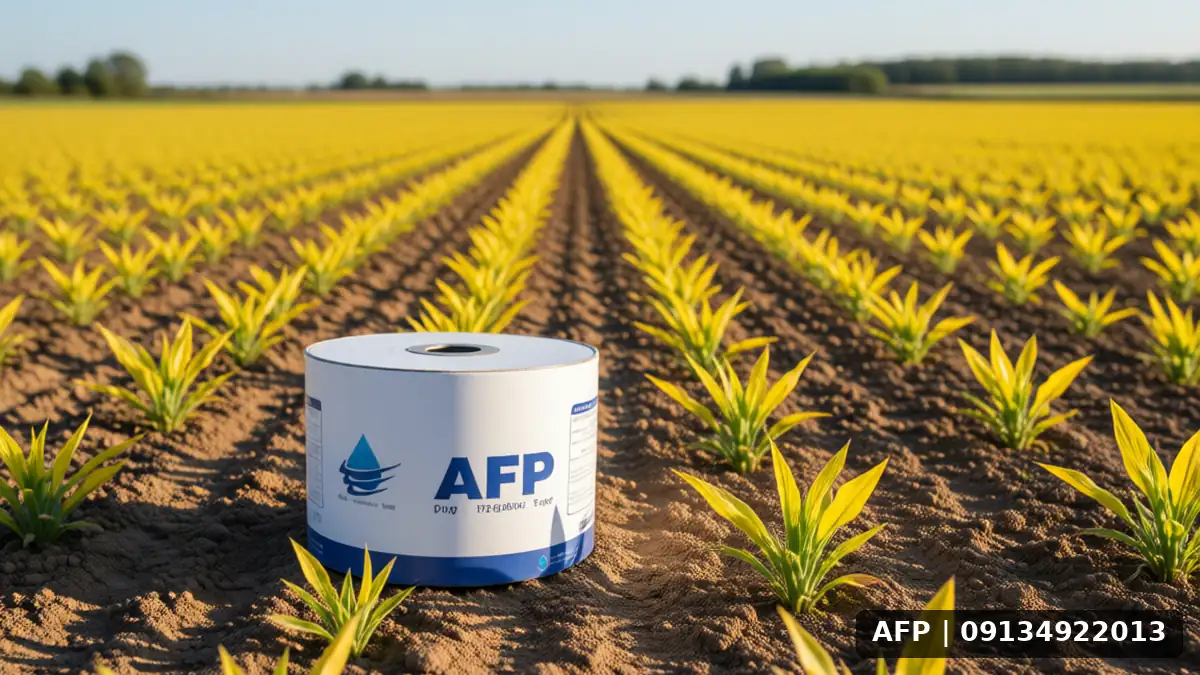
2. Water Flow and Pressure Management of the System
For an optimal 10 to 15 cm coverage zone around the drip tape, the system operating pressure must be between 1 and 2 bar. If the pressure is too high, water creates flooded pools around the tape, causing scalding damage to the delicate faba bean roots. Conversely, low pressure results in incomplete coverage. Balancing Drip tape spacing in faba bean cultivation and irrigation pressure are two sides of the same coin.
3. Scheduling irrigation based on soil temperature
Chickpeas are sensitive to Constant Moisture levels throughout the crop season. In spring and summer, the optimal time for drip tape cycling is when soil temperature drops in the late night. Daily irrigation with low volume (10 to 15 cubic meters per hectare depending on climate) instead of large weekly irrigation significantly reduces the risk of root gaps and fungal diseases caused by moisture-dryness fluctuations.
Common challenges and practical solutions
- Plant nutrition and drip tape flushing: When injecting fertilizer through the drip tape, the distance between the tape and the root is critically important. If the distance in a two-row layout is less than 5 centimeters, the fertilizer solution concentration can increase locally, causing Fertilizer Burn. Simultaneous application of fertilizer with irrigation water and adjusting the optimal concentration is Drip tape spacing in chickpea planting recommended.
- Tape burial with soil: After the second week of planting, lentil lateral roots seek moisture by moving from the soil surface deeper into the profile. If the drip tape is not completely covered with soil, the roots will establish in the top 5 cm layer, which dries out with the first wind and sun. Therefore, spreading soil over the drip tape by the seeder is an undeniable duty.
- Managing weeds between drip tape lines: The empty spaces between drip tape lines in open layouts provide a suitable environment for weed growth. The use of targeted chemical herbicides before tape rotation is necessary to prevent weeds from competing for moisture and nutrients.
Farmers’ observations indicate that optimal management drip tape spacing in lentil cropping regardless of rooting conditions, can increase water efficiency by up to 20 percent. This increase in efficiency directly affects the lentil grain yield per hectare.
Frequently Asked Questions (FAQ) about Drip Irrigation of Lentils
- Question: Can drip tape be placed in the soil between lentil rows?
Answer: Yes, in a two-row layout, the drip tape is placed exactly in the middle of the spacing between two two-row blocks. This ‘between-row’ placement prevents the main roots from being cut by the drip tape and creates a shared leaching channel for both rows. - Question: When should we use 16 mm drip tape instead of 12 mm?
Answer: In areas with severe water scarcity and daily demand above 10 cubic meters, 16 mm drip tape with maximally spaced emitters provides higher water delivery with equal leaching. In temperate areas, 12 mm drip tape with 15-15 cm emitter spacing provides the necessary coverage. - Question: How can we prevent a dry gap under the drip tape in loose soils?
Answer: Plant lentils at a shallower depth (3 cm) and use drip tape with 10-15 cm emitter spacing in Drip tape spacing in lentil cultivation Optimization causes the leachate water to fill deeper layers through capillary movement. Additionally, proper drainage before planting prevents the formation of waterlogged depressions around the drip line. - Question: Does the distance between the drip line and the row corner matter in a single-row layout?
Answer: Yes. In a single-row layout, if the distance of the drip line from the row center exceeds 12 centimeters, the moisture remains as a localized and concentrated leachate, leaving lateral roots in the dry leachate zone on either side. Desired leachate coverage requires a distance of less than 10 centimeters.
Summary: A sustainable strategy for water use efficiency
Optimal selection Drip line spacing in clover cultivation This is a process that integrates soil science, plant physiology, and irrigation engineering. A two-row layout with the drip line placed in the center of the block is an efficient choice for most agricultural layers using machinery, as it prevents root damage and provides uniform moisture coverage for both rows.
Ultimately, attention to ecological characteristics, the use of appropriate pressure performance, and regular maintenance of drip line flushing require continuous soil moisture monitoring throughout the growing season. To ensure maximum pea production, farmers can refer to the [Comprehensive Zucchini Planting Guide](https://navar-abyari.ir/%d8%b1%d8%a7%d9%87%d9%86%d9%85%d8%a7%db%8c-%d8%ac%d8%a7%d9%85%d8%b9-%da%a9%d8%a7%d8%b4%d8%aa-%da%a9%d8%af%d9%88-%d8%aa%d8%ae%d9%85%db%8c/) and [Fava Bean Seed Rate per Hectare](https://navar-abyari.ir/%d9%85%d9%82%d8%af%d8%b1-%d8%a8%d8%af%d8%b1-%d8%a8%d8%a7%d9%82%d9%84%d8%a7-%d8%af%d8%b1-%d9%87%da%a9%d8%aa%d8%a7%d8%b1/) as supplementary resources for planning other grain crops. Also, to better understand sorghum yield per hectare, reading the [Sorghum Yield per Hectare](https://navar-abyari.ir/%d9%85%db%8c%d8%b2%d8%a7%d9%86-%d8%a8%d8%b1%d8%af%d8%a7%d8%b4%d8%aa-%d8%ac%d9%88-%d8%af%d9%88%d8%b3%d8%b1-%d8%af%d8%b1-%d9%87%da%a9%d8%aa%d8%a7%d8%b1/) is recommended. Finally, if you are looking to optimize your irrigation system in ornamental and rainfed cropping, [Rice and Other Paddy Yields](https://navar-abyari.ir/%D9%85%DB%8C%D8%B2%D8%A7%D9%86-%D8%A8%D8%B1%D8%AF%D8%A7%D8%B4%D8%AA-%D8%AC%D9%88-%D8%B4%D8%B4-%D9%BE%D8%B1-%D8%AF%D8%B1-%D9%87%DA%A9%D8%AA%D8%A7%D8%B1/) provides important tips.
Related content: Comprehensive Zucchini Planting Guide, sesame seed quantity per hectare yield tips, Related article Related article D984DB8C Related article, bell pepper yield per hectare tajik farmers