Rip Line Spacing in Sorrel Cultivation: Recommended Standards
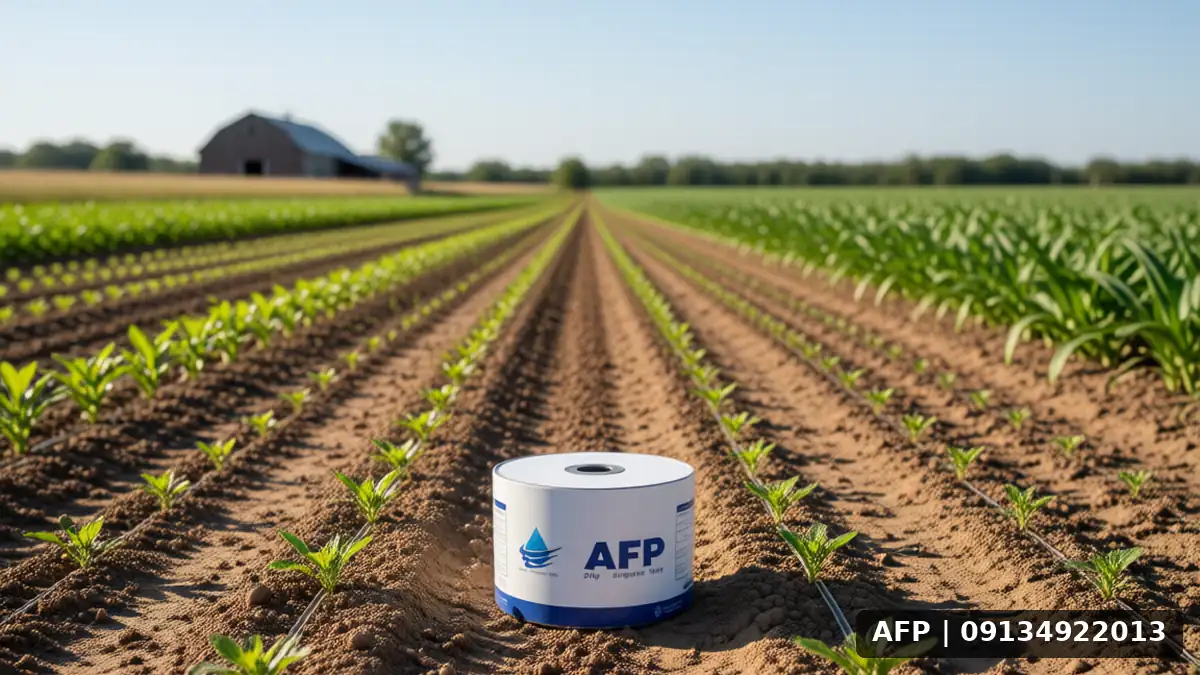
Introduction to the Importance of Drip Line Spacing in Spinach Cultivation
Due to its moderate water requirements and root sensitivity to relative drought, spinach cultivation requires precise irrigation system layout. Drip Line Spacing in Spinach Cultivation One of the key parameters in designing drip irrigation lines, it directly affects soil moisture uniformity, water consumption, and ultimately vegetable yield. Many farmers struggle with issues such as uneven growth, root rot, or water application to inter-row spaces due to incorrect spacing determination.
In this article, we examine recommended technical standards so you can select the optimal layout for your farm. We focus on practical tips, environmental factors, and calculation methods to establish a sustainable and economical irrigation system.
Technical Standards and Recommended Spacing
Determining drip line spacing depends on several factors, but basic standards exist based on seed type, planting method (transplanting or seeding), and soil texture. For spinach, which has a taproot system, focusing on moisture coverage in the root zone is essential.
1. Internal Line Spacing (Bed Spacing)
Emitter spacing, or the distance between water outlets in the drip tape, plays a crucial role in uniform water distribution. For dill, 20 to 30 cm emitter spacing is generally recommended. This spacing ensures that soil wetting zones overlap, maintaining consistent moisture. If the soil is more clayey, use a shorter spacing; for sandy soils, the spacing can be slightly increased.
2. Drip Tape Spacing
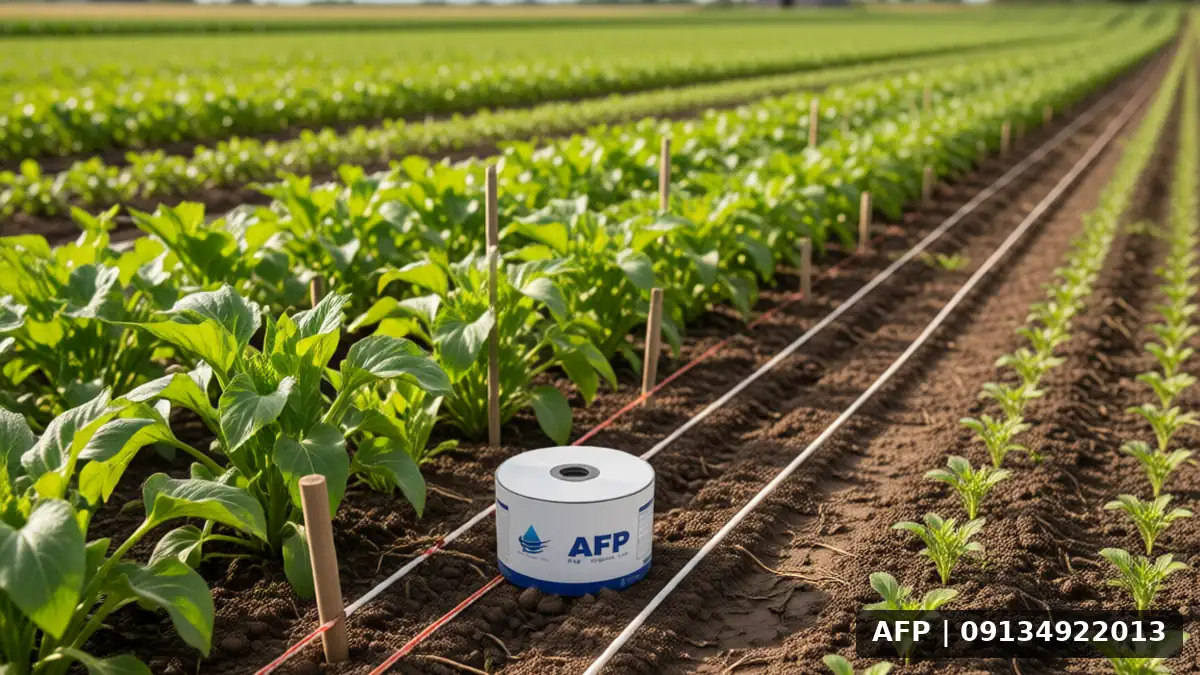
A key consideration is the distance between planting rows and the positioning of the drip tape. In dill row cropping, the space between rows is usually 30 to 40 cm. The drip tape should be placed exactly in the middle of this space or 10 to 15 cm from the planting point on one side. The goal is to ensure roots can access moisture without being directly on the drip tape, which can cause tape damage.
The Impact of Soil Texture on Drip Tape Layout
Soil texture is the primary factor determining permeability and the expansion of the wetting zone. In sandy soils, water infiltrates quickly and the wetting zone is smaller; therefore, closer drip tape spacing or smaller emitter spacing may be required. Conversely, in clay-loam soils, infiltration is slower, and water moves deeper and laterally. In such cases, emitter spacing can be increased to prevent root zone saturation.
Additionally, land slope and sun exposure affect layout selection. In dry regions with intense solar radiation, using plastic mulch alongside the drip tape can reduce evaporation and increase system efficiency.
Practical Installation and Implementation Tips
For the successful implementation of drip irrigation in soybean cropping, it is recommended to observe the following points:
- Precise installation at the planting site: The tape must be installed in the soil simultaneously with seed or cutting planting to prevent damage to the tape by machinery.
- Pressure management: Ensure that the input pressure to the tape is within the range of 1 to 2 bar. Low pressure causes spray, and high pressure causes bursting and breaking of the tape.
- Use of filters: Be sure to use appropriate filters to prevent emitter clogging. Clogging, even in small emitters, can disrupt the irrigation pattern.
- Monitoring integrity: After installation, pressure testing and checking for uniform water output along the entire length of the tape are essential.
Optimizing Water and Energy Consumption
Drip irrigation using drip tape can reduce water consumption by up to 30% compared to flood irrigation. To improve this efficiency, you can use smart control systems that adjust irrigation cycles based on air temperature and crop needs. In this regard, a deep understanding of the consumption rate of drip tape for irrigation helps you calculate the appropriate flow rate. Additionally, paying attention to the cost of drip tape per hectare before investment is important for managing initial and operational costs during the growing season.
Frequently Asked Questions (FAQ)
Below are answers to some of the most common questions farmers have regarding drip tape spacing and installation in crop cultivation:
Does drip tape spacing depend on the seed type?
Yes, the seed type (seeding or cutting) has an impact. In seeding, seeds are typically planted 5 to 10 centimeters away from the drip line to allow young roots to access moisture without direct contact with the plastic tape.
When should drip tape be replaced?
Drip tapes are generally single-use or can be used for a maximum of two seasons. After the season ends, it is recommended to use new tapes to ensure irrigation quality, due to chemical degradation and abrasion of the plastic.
Can I combine drip tape with a fertigation system?
Yes, drip tape irrigation systems support fertigation (simultaneous water and nutrient delivery). This method is highly efficient for providing precise nutrition and reduces fertilizer waste.
Impact of layout on other vegetables
Agricultural scientists believe that the principles of drip line spacing for carrots can be generalized to other root and crown vegetables. For example, in onion cultivation, the spacings are slightly different, but the logic remains the same. To learn more about the differences, you can refer to drip irrigation of onions . Additionally, the sections related to wheat and six-row barley yield per hectare indicate that planting density is directly linked to the arrangement of drip lines; as density increases, the need for greater precision in moisture coverage also increases.
Summary and Final Recommendations
Selection of drip line spacing in carrot cultivation This is a multidimensional decision that must be made by considering soil texture, land slope, seed type, and energy sources. Adhering to standard spacings (20-30 cm for beds and 30-40 cm for rows) while continuously monitoring the system will lead to maximum efficiency and reduced irrigation costs. It is always recommended to conduct a small-scale trial on a section of the farm before extensive investment to understand local parameters. This trial approach not only reduces financial risk but also enhances your knowledge of water, soil, and plant interactions.
Related articles: Related article Related article Related article D8AFD8B1 Related article