Drip Tape Spacing for Melon Cultivation: Recommended Standards
Introduction to the importance of correct drip line layout in melon cultivation
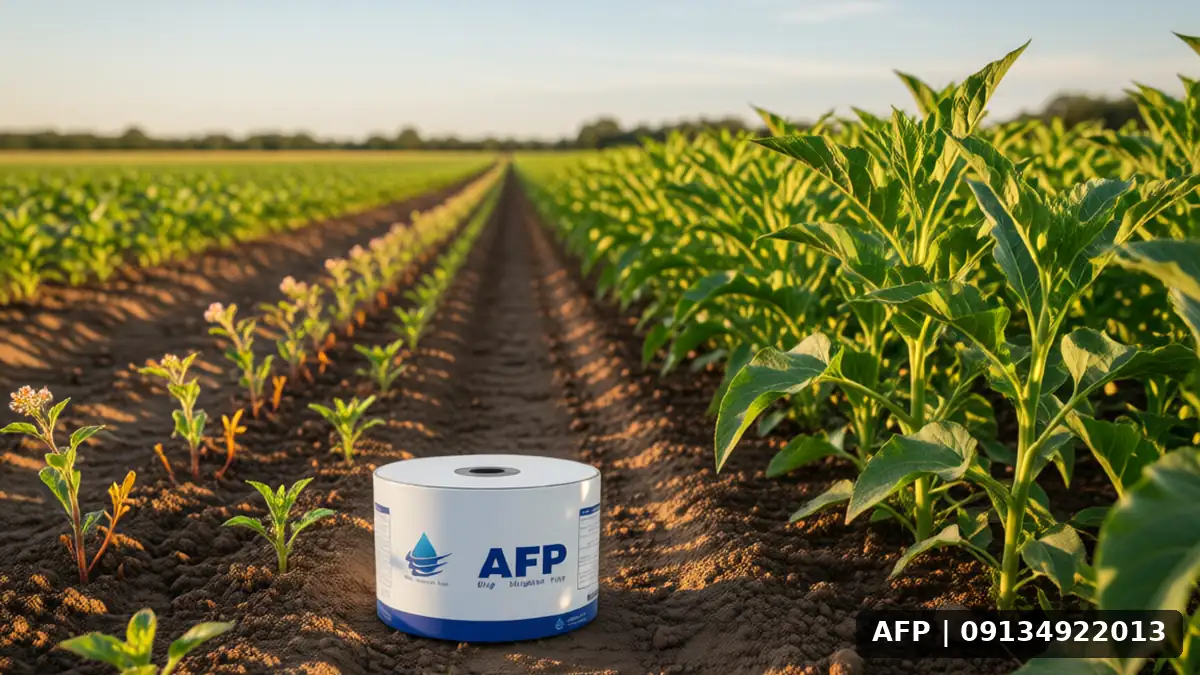
Melon cultivation, due to its specific root requirements and high sensitivity to water stress, is one of the effective applications of drip line systems. Selecting the appropriate spacing between rows and the correct position of the drip line directly affects moisture penetration depth, root development, and ultimately fruit weight and quality. In modern farming, the main goal is to reduce water volume consumption through localized irrigation; however, if row spacing is not coordinated with the type of drip tubes, this benefit will not be realized, and relative dryness in the deeper soil layers will be encountered.
We emphasize again that ‘drip line spacing’ does not merely refer to the physical width of the pipe, but includes a set of variables such as planting row spacing, drip emitter spacing on the pipe, soil type, and solar radiation intensity. The following variables play a role in determining the final spacing:
- Soil type (sandy, loamy, silty)
- Melon variety and growth stage
- Planting method (single row, double row, hole planting)
Technical standards for determining row and line spacing
Impact of melon root depth on water use efficiency
The melon root system is largely superficial, but in early growth stages, deep root penetration is vital for plant stability. Therefore, the drip line spacing should not be so wide that the dry zone between two lines expands, nor so narrow that excess moisture causes root rot and fungal diseases. Based on Agricultural drip line connections and hydraulic principles, there is an empirical formula to calculate the maximum line spacing based on the drip wetting radius. Under normal conditions, the drip spacing on the line is set between 20 and 30 centimeters. If the drip spacing is 20 centimeters, the spacing between two rows of drip lines, each placed within a planting row, is usually in the range of 80 to 100 centimeters to cover the wet zone under the main plant root.
Guide table for drip line spacing in melon cultivation based on soil type
It is observed that in silty soils, the spacing between drippers can be wider, as water infiltrates more slowly and moisture remains in the upper layers for a longer period. Additionally, for Agricultural drip tape connections It must be ensured that there are no leaks, as in heavy soil textures, even minor leaks can cause relative waterlogging at the connection point and damage the roots.
Practical tips for optimizing tape layout and planting
Impact of planting layout on tape spacing selection
In cantaloupe cultivation, two common planting methods exist: single-row planting with longer longitudinal spacing and double-row planting (in between). In the latter method, which is more common, the spacing between two main rows is typically 120 to 150 centimeters. In this case, the drip tape is placed exactly in the center of each planting row. Thus, the horizontal distance from the tape to the center of the adjacent row is half the row spacing. Therefore, if the distance between two planting rows is 140 centimeters, the wetting radius must cover at least 70 to 75 centimeters to ensure that the lateral roots of plants in the same row have sufficient water access. This calculation is more accurate than guessing the appropriate distance and can be evaluated using per-hectare water distribution and local standards.
Practical installation and maintenance tips
- Synchronized planting and tape layout: Lay the drip tape so that the connections fall directly beneath the midpoint between two seeds, allowing the roots to access the points of higher moisture strength.
- Plastic mulch: Using white or silver plastic mulch between tape lanes significantly reduces surface evaporation and maintains ideal soil temperature for melon growth.
- Pressure monitoring: As the ground slope increases, pressure at the downhill end of the tape rises. To regulate the effective droplet spacing, use anti-leak designed tapes and secure connections.
- Tape retrieval: After the melon harvest, the tape must be stored sufficiently for the next season; Extending drip tape lifespan This is achievable through proper collection.
Impact of light and temperature on tape performance
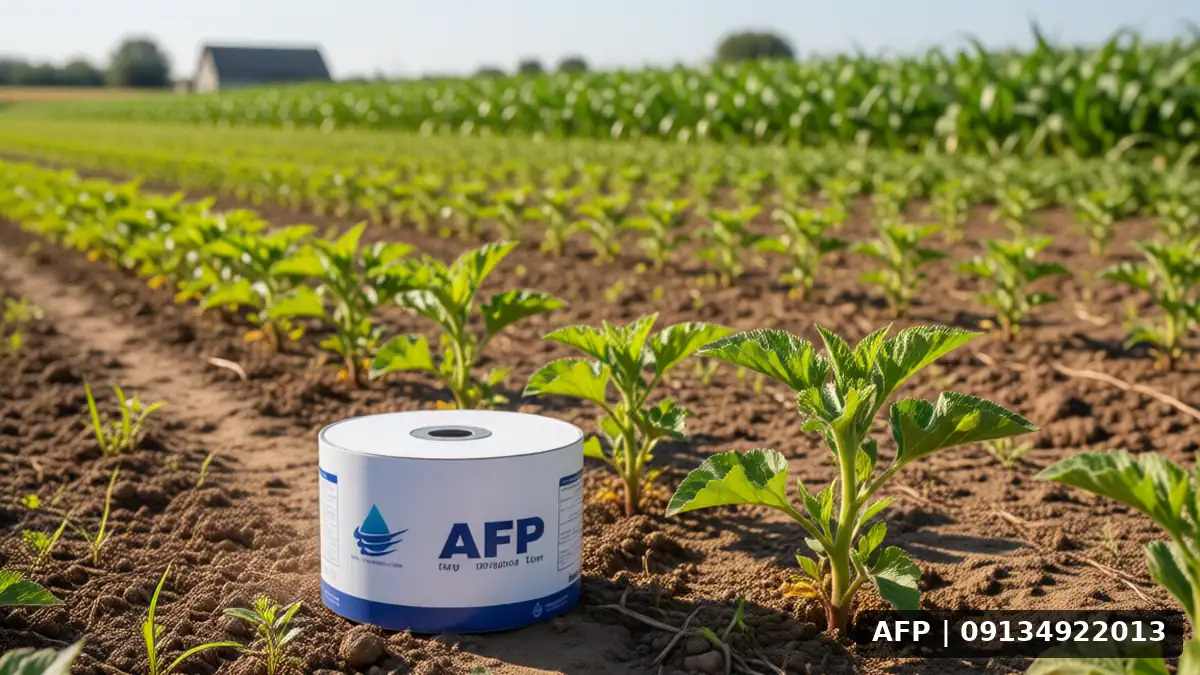
Spacing selection criteria should ensure that at night and during cool periods, excess moisture does not accumulate in the soil, and at midday in summer, acceptable surface dryness remains. Melons require frequent but short-duration irrigation during hot summer months to prevent root drought. Adjust the drip tape layout so that the maximum wetted width covers approximately two-thirds to three-quarters of the row spacing; this is ideal for weed control, water management, and prevention of root diseases.
Frequently Asked Questions (FAQ)
Can droplet spacing be changed during the season?
No, droplet spacing is structural on the tape and cannot be physically altered. However, different tapes with 20, 25, or 30 cm spacing can be used in different parts of the field (based on slope and soil quality). Changes must be determined at the start of the season, during planting.
How should spacing be selected if the field soil is not uniform?
In such conditions, dividing the field into irrigation zones is recommended. A 20 cm droplet spacing is more suitable for light soil zones, while 30 cm spacing is better for heavy soil zones. It is also possible to Strategies to increase yield per hectare Utilize soil moisture sensors at various points for precise control of irrigation.
What should be done if the moisture between the two tapes remains dry throughout the season?
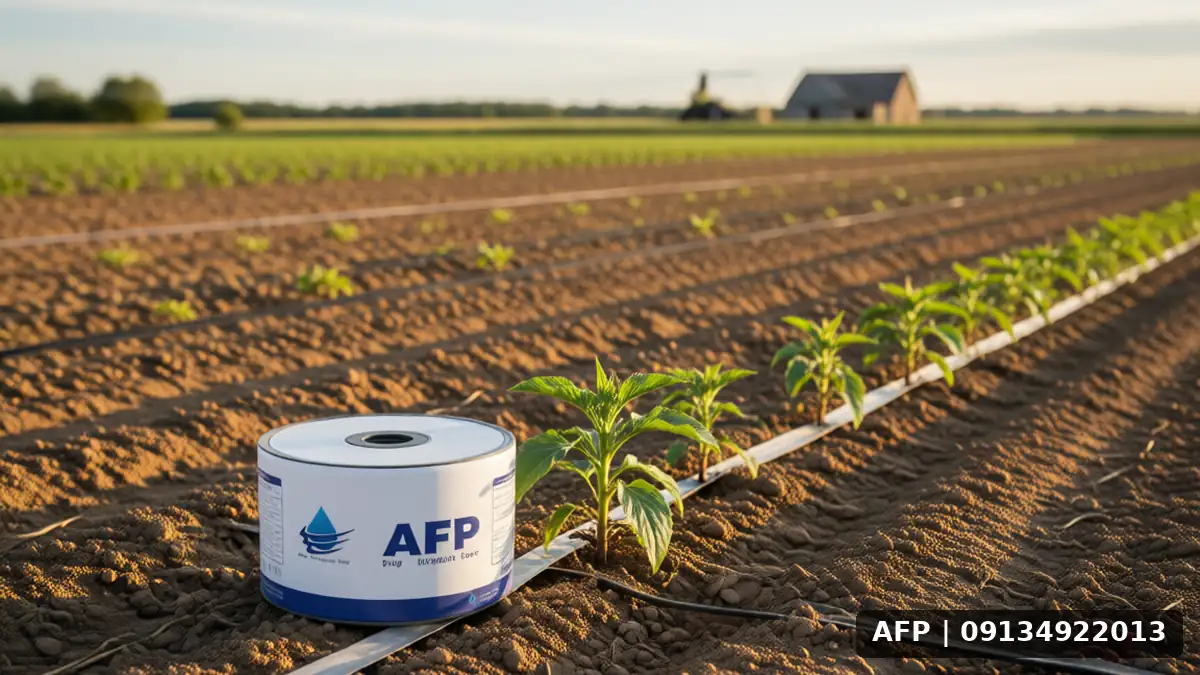
In this case, it indicates that the tape spacing is significantly wider relative to the root depth of the plants in that area. In the next season, the drip spacing should be reduced (e.g., changing from 30 to 25 centimeters) or the distance between rows should be slightly decreased to ensure more complete moisture coverage.
Summary and final recommendations
Selecting the tape spacing for melon cultivation is a multi-variable decision that considers the combination of soil quality, type of drip system, and regional climatic conditions. In summary, for most farms with loam soil and two-row planting, a drip spacing of 25 centimeters at a distance of 90 to 105 centimeters from the planting center provides an appropriate balance between water usage, plant growth, and produce quality. Adhering to installation principles, proper connections, and pressure monitoring is the key to successfully benefiting from the advantages of drip tape. By following these principles and the mentioned standards, you can confidently contribute to increased efficiency and the reduction of water resource waste.