Comprehensive Guide to Cucumber Cultivation with Drip and Tape Irrigation
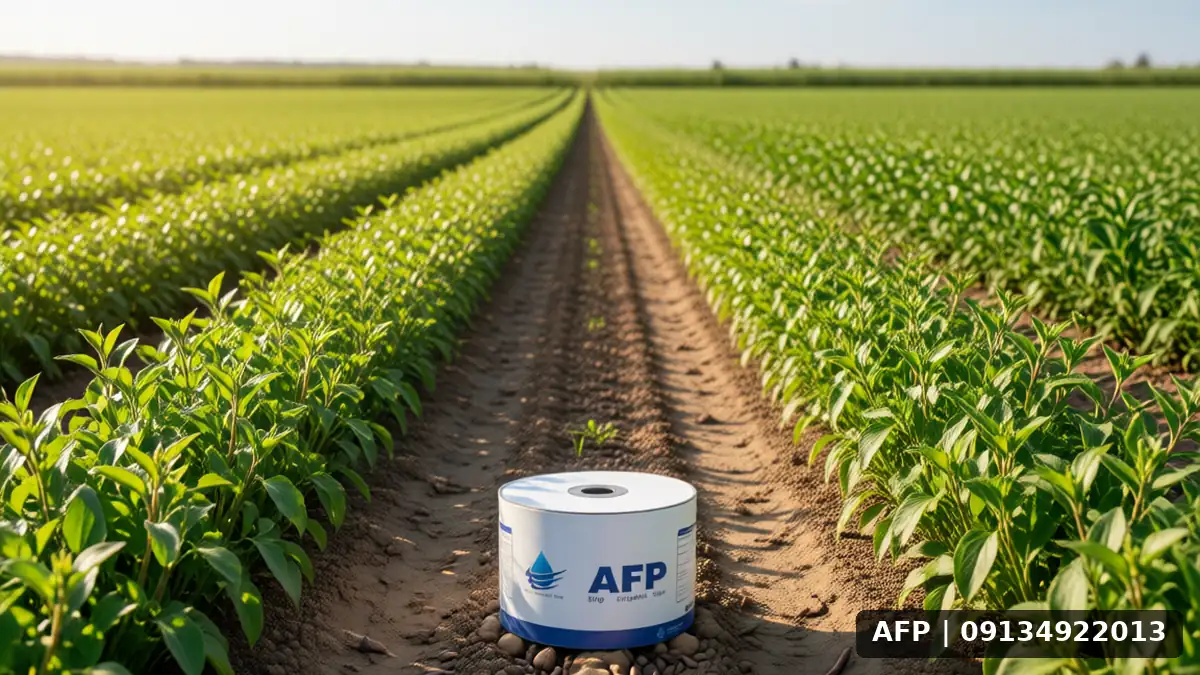
Introduction: The Importance of Drip Irrigation in Mung Bean Cultivation
Mung beans are among the most important early-maturing pulses in Iranian agriculture, generating significant economic returns for farmers due to their short growth cycle. Given the importance of water in agricultural economics, the use of traditional sprinkler irrigation methods leads to energy waste and physiological stress in plants. In this context, pressurized irrigation systems such as drip and tape-tip provide modern solutions that enable precise water resource management. Drip irrigation for mung beans not only reduces water consumption by up to 50% but also minimizes the incidence of surface fungal diseases by keeping the root zone moist and the soil surface dry. In this article, we examine in detail the implementation of mung bean drip irrigation and appropriate scheduling for each growth stage to help you leverage the full potential of this technology.
Principles of Planting and Bed Preparation in Drip Systems
Success in mung bean irrigation begins with field preparation. Before planting, the land must be thoroughly plowed and harrowed to ensure a loose, free-draining soil. Baseline fertilization with organic and mineral fertilizers is also critical at this stage. A key aspect of drip systems is ‘planting spacing’ and row arrangement. Mung beans are typically planted in dense rows. It is recommended to adjust row spacing to 40 to 50 cm so that the tape-tip or drip line can be positioned regularly below or beside the rows. This arrangement ensures water reaches the root zone directly and reduces water loss due to evaporation from the soil surface. To better understand the general principles of plant arrangement in irrigation lines and water delivery management, studying aerial yield per hectare can provide a complementary perspective on resource optimization in farms.
Irrigation Schedule for Mung Beans at Different Growth Stages
Mung bean is a plant with a short growth cycle (approximately 50 to 60 days) and relative sensitivity to water stress during flowering and seed formation. The irrigation schedule should be adjusted based on the plant’s daily water requirements and regional climatic conditions. Generally, in drip irrigation, water is applied slowly in small but frequent volumes to prevent soil from drying out between irrigation events. Proper water management at each growth phase directly affects seed weight and final yield.
Germination and Initial Vegetative Stage
- For the first 5 days after planting, light and short irrigations (10 to 15 minutes) daily or every two days are recommended to ensure uniform seed moisture and initiate active germination.
- Once seedlings emerge from the soil, irrigation duration should be gradually increased to allow full development of secondary roots.
Vegetative growth stage
During this stage, which includes leaf development and canopy closure, the plant’s water demand increases. Irrigation frequency can be every 2 to 3 days with a duration of 20 to 30 minutes. Root penetration depth is greater during this period, and the soil must remain moist. For a better understanding of water requirements under different climatic conditions and system sustainability, studying Wheat Tip-line spacing and modern irrigation methods can provide complementary insights into spacing and flow rate settings for other crops.
Flowering and fruiting stage
- This is the most sensitive period to water stress. Any dryness can lead to reduced plant weight and final grain quality.
- Irrigation should be more regular (every 1 to 2 days) to prevent pod shatter.
- Nozzle flow intensity may need to be slightly increased to maintain root pressure on the soil for breaking the surface crust and better nutrient absorption.
Maturity stage and harvest preparation
Stop irrigation approximately one week before harvest. This promotes sugar accumulation in the seeds and proper plant drying, which is critical for industrial mung bean processing. For comparison with other legumes and to better understand planting density, the article Chickpea seed rate per hectare provides additional information on similar requirements for this crop category.
Practical tips and system management for tape drip irrigation
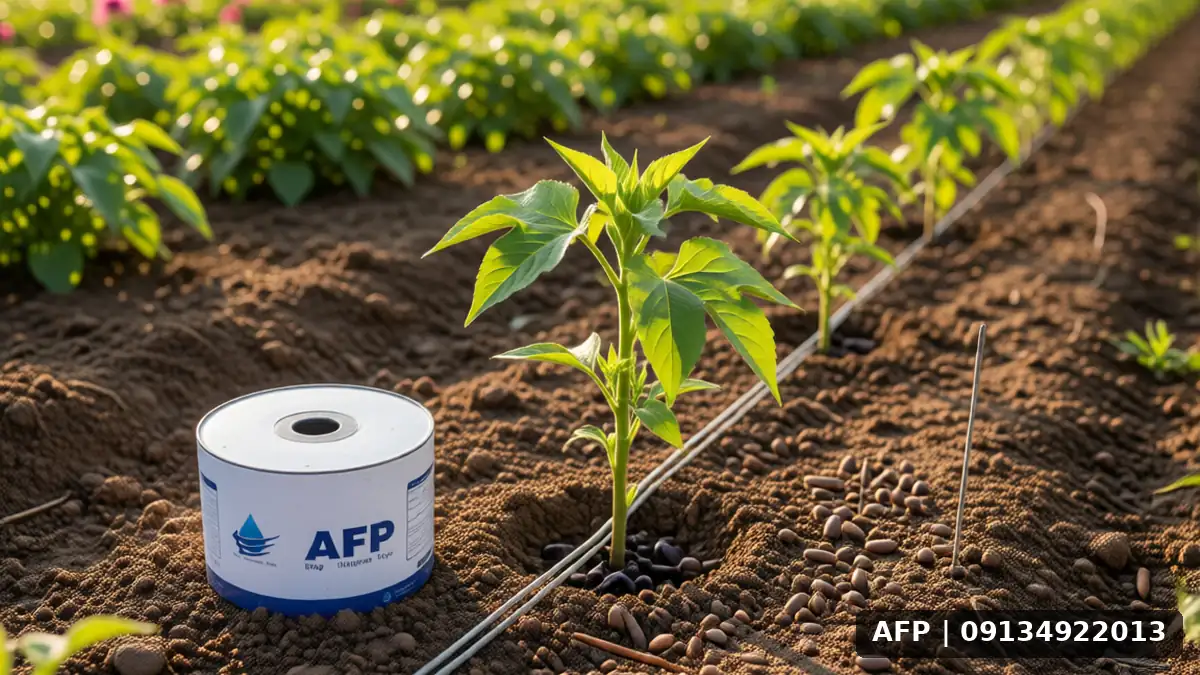
Tape drip irrigation is highly efficient for mung beans, especially in large-scale farms. Unlike point drip emitters, tape drip has narrow slots along its length that release water uniformly down the row. This method is ideal for mung beans, which are sown in neat rows. During installation, ensure the tape is laid directly on the soil surface along the center of the row and secured with wooden pegs or wire to prevent wind displacement. If using point drip emitters, space the emitters 20 to 30 cm apart along the lateral line to ensure uniform coverage.
Preventing nozzle clogging
Mung bean roots are fine and can approach small nozzle orifices. Additionally, salt deposits in saline soils can cause blockages. The use of a disc or mesh filter with 120 to 150 mesh is mandatory. It is also recommended to have a daily flushing system to remove deposits from inside the pipes. If you are in a region with hard water, consulting with specialists about adding acidifiers to prevent calcium scale is essential. To see another practical example of modern systems for grain and leguminous crops, you can refer to the yields of sunflower per hectare using tape drip irrigation which indicates the stability of this method in other crops.
Frequently Asked Questions (FAQ)
Can the same drip system used for wheat be used for mung beans?
The general pipe structure is the same, but flow rate and emitter spacing parameters change. Emitter spacing for wheat is generally wider. For mung beans, which have high planting density, you require a higher number of emitters per unit area. Therefore, adjustments must be made on a new system or the previous system must be modified to prevent waterlogging of mung bean roots.
When is the best time to install tape drip for mung beans?
Tape drip can be installed simultaneously with seeding to reduce labor costs, but care must be taken to ensure the tape does not get buried in the soil and to prevent positional errors. It is better to lay the tape on the soil surface or at a shallow depth (5 cm) after plowing and before planting so that it is accessible to initial root development.
Is fertigation (fertilizer injection via drip irrigation) recommended for mung beans?
Yes, fertigation is one of the main advantages of drip irrigation. However, solid fertilizers should be used with caution. Liquid fertilizers at appropriate concentrations (e.g., 5-10 grams per liter) should be injected during cool hours. Avoid applying fertilizer and running the tape drip irrigation simultaneously unless you have a strong flushing system to prevent deposition inside the pipes.
Summary
Correct implementation of drip irrigation in pea cultivation is the key to achieving a uniform, healthy, and economically efficient yield. By observing appropriate planting spacing, precisely adjusting the irrigation schedule based on growth stages, and maintaining the system, you can prevent water stress and diseases while maximizing water use efficiency. This method is highly cost-effective for both the environment and farmers’ budgets. Mastery of these techniques forms the foundation of sustainable and precision agriculture in Iran’s low-rainfall regions.
Related articles: Wheat bed planting spacing and modern irrigation methods, uswali shinodani piyaz obri nuqravi