Comprehensive Guide to Saffron Cultivation Using Drip Irrigation
Introduction to Water Management in Saffron Cultivation
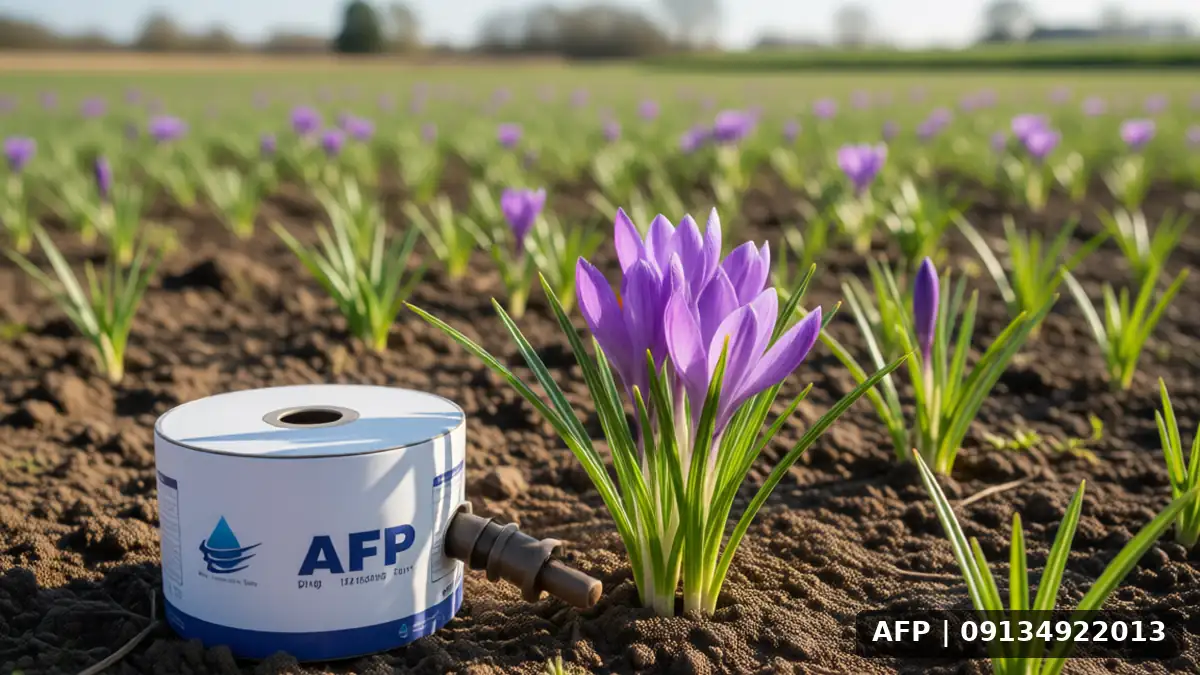
Saffron is a plant that, although it grows in arid regions, requires precise water resource management during sensitive growth and flowering stages. The use of saffron drip irrigation is considered one of the most practical methods for reducing water consumption and increasing efficiency in these crops. In recent years, with the adoption of modern pressurized irrigation techniques, farmers have concluded that replacing spray or flood irrigation with piped systems not only prevents water loss but also ensures uniform soil moisture in the saffron corm rooting zone. This section of the article examines the fundamentals of this method and why it is suitable for saffron.
Review of Planting Methods and Drip Lateral Layout in Saffron Cultivation
Selecting the appropriate planting method is the first step to success in pressurized irrigation. In saffron cultivation, row and circular methods are typically used, each requiring different adjustments in the irrigation system. When using drip laterals, the distance between laterals and from the saffron corms must be determined to ensure water penetrates uniformly to a soil depth of approximately 15 to 20 cm. Understanding the types of irrigation tubing helps you select the best option for your orchard conditions. To better understand the structure and differences of these tubes, you can read the guide on types of drip irrigation laterals. This guide helps you distinguish between single-wall and double-wall tubes based on thickness and flow capacity, ensuring a correct selection.
Optimizing Drip Lateral Spacing
In saffron orchards where corms are planted in rows, drip laterals should be placed at the ends of rows or 10 to 15 cm from the corms. The objective of this layout is to direct irrigation directly to the roots and prevent unnecessary wetting of broad soil surfaces that promotes weed growth. The output flow rate from the laterals must be adjusted according to soil type (permeable or impermeable) to ensure simultaneous irrigation water distribution across all orchard sections.
Scheduling and Planning Saffron Drip Irrigation
The most critical aspect of saffron drip irrigationis the correct timing of irrigation during the vegetative cycle. Saffron has two sensitive irrigation stages: the first before leaf emergence and the second before flowering. In the initial autumn months, after planting, irrigation should be deep and repeated at low frequency to stabilize roots in the soil. During the cold season, irrigation should be applied in short, low-volume sessions to prevent root freezing and moisture loss. In spring, with the onset of leaf emergence, water demand increases, and irrigation flow rate should be increased. Proper management of this cycle requires understanding soil moisture balance. To better understand how to improve system efficiency and prevent tube deviations, it is recommended to read the article on increasing the efficiency and productivity of drip laterals. This text provides tips for cleaning filters and reducing pump energy waste, which is vital for saffron growers.
Irrigation Requirements in Different Seasons
- Cropping Season (Autumn): Deep irrigation at 15 to 20-day intervals. The goal is to ensure complete root-to-soil contact.
- Leaf Growth Season (February and March): Increase drip lateral flow rate to support fine soil texture balance. Short and frequent irrigation sessions.
- Drainage season (June and July): Reduce irrigation to prepare intercropped areas for summer crops. Precise moisture management prevents corm (bulb) rot in saffron.
Practical tips for installing and maintaining drip irrigation systems in saffron
Correct system operation is half the success in modern saffron cultivation. One key point is maintaining uniform pressure in main and lateral lines. Pressure fluctuations can cause tape adhesion issues and alter irrigation uniformity. Additionally, using appropriate filter media is mandatory to prevent emitter clogging by suspended particles in the water. In regions where irrigation water has high hardness and mineral salt content, acidifying agents must be used in irrigation tanks to prevent pipe scaling. To assess the balance of different soil textures and estimate water requirements, referencing the seed corm planting density per hectare (comprehensive guide) can be useful, as similar principles of balance calculations apply to corm cultivation and saffron in shared water resource management.
Common troubleshooting in tape systems
- Variation in water discharge uniformity: Usually caused by clogging of tape inlets or pressure drop at the beginning of the line.
- Adhesion and water leakage: If tape emitters are not flushed, water will not exit the tape and will pool at specific points.
- Rot of intercropped plants: Excessive irrigation and waterlogging of roots cause fungal diseases, which the drip system must control by precisely adjusting flow rate.
Frequently asked questions about saffron drip irrigation
Which is more suitable for saffron, tape or drip systems?
Both methods are effective, but tape systems are more commonly used because they provide more uniform coverage of saffron roots, which are planted in rows. Traditional point drip systems are recommended only when the planting distance between intercropped plants is wide.
How long should a single drip irrigation session last?
This duration depends on soil depth, soil texture, and ambient temperature. In general, drip irrigation should last long enough to wet roots at a depth of 15 to 20 centimeters. Typically, this is between 2 to 4 hours on cool days and less on hot days.
Impact of drip irrigation on saffron crop yield
Proper use of drip irrigation reduces water consumption by 30 to 50 percent compared to flood irrigation and prevents the cracking of crowns and yield reduction due to uniform moisture levels.
Final summary and recommendations for saffron farmers
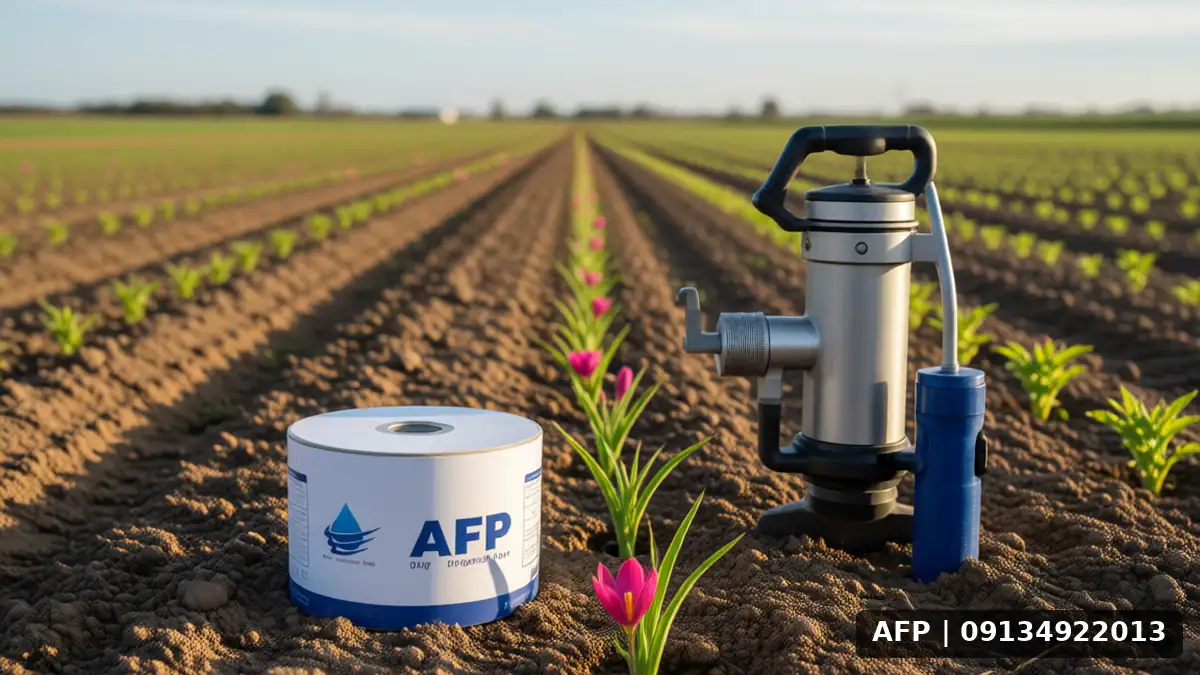
Making the decision to shift toward pressurized irrigation, particularly saffron drip irrigation Using a drip tape system is a significant step toward reducing production costs and extending the economic lifespan of saffron fields. By considering the mentioned technical points, such as selecting the appropriate drip tape type, maintaining proper distance from the crowns, and precise irrigation scheduling during growth seasons, farmers can maximize water productivity. It is recommended to conduct soil texture balance tests before installing the system to calibrate the tape flow rate with actual field conditions. To better understand how to calculate the required water volume, you can study the irrigation requirements for one hectare of orchard to derive water balance equations under various conditions. Ultimately, continuous monitoring of pressure and output flow from the drip tape ensures the longevity of the irrigation system and the health of saffron crowns. With this approach, farmers can achieve maximum saffron quality and quantity while minimizing resource consumption, contributing to the sustainable agricultural economy of the region.
Related articles: miqdori tuhmi qahvagi dar yak gektar, How to increase drip tape efficiency and productivity, mung bean seed rate per hectare afghanistan, rapso hosilonkii dar gektar dehqonon